


Finding more hair than usual on your pillow, in your brush or near the shower drain can be worrying. The first instinct is often to try an oil, a hair-growth shampoo or a homemade mask. But **the best way to reduce hair fall is to understand why it is happening**. Hair that snaps halfway down its length needs different care from hair that sheds from the root—and neither problem is necessarily the same as gradual thinning at the centre part.
The good news is that several gentle habits can help limit breakage and prevent avoidable damage. If the shedding follows an illness, childbirth, significant stress or rapid weight loss, it may improve as the trigger resolves. Other causes, including female-pattern hair loss, need a diagnosis and may benefit from medical treatment. 1 2
Quick answer: To reduce avoidable hair fall, wash according to your scalp’s needs, condition the lengths, detangle gently, avoid tight hairstyles and excessive heat, and eat enough protein and iron-rich foods. Do not start hair-growth supplements without a reason. If you notice a widening part, bald patches, scalp inflammation or persistent heavy shedding, see a dermatologist rather than relying on home remedies. 1 3 4
A note from WomenSutra: This guide explains common hair-care choices and what the evidence does—and does not—support. It is educational, not a personal diagnosis or a promise of regrowth. The best treatment depends on the cause of your hair loss.
Is it normal to lose hair every day?
Yes. The American Academy of Dermatology (AAD) says that shedding approximately 50–100 hairs a day is typical, though daily counts vary and are not a reliable way to diagnose a problem on their own. You may see more loose hairs on wash day if you have not washed or brushed for several days. 1
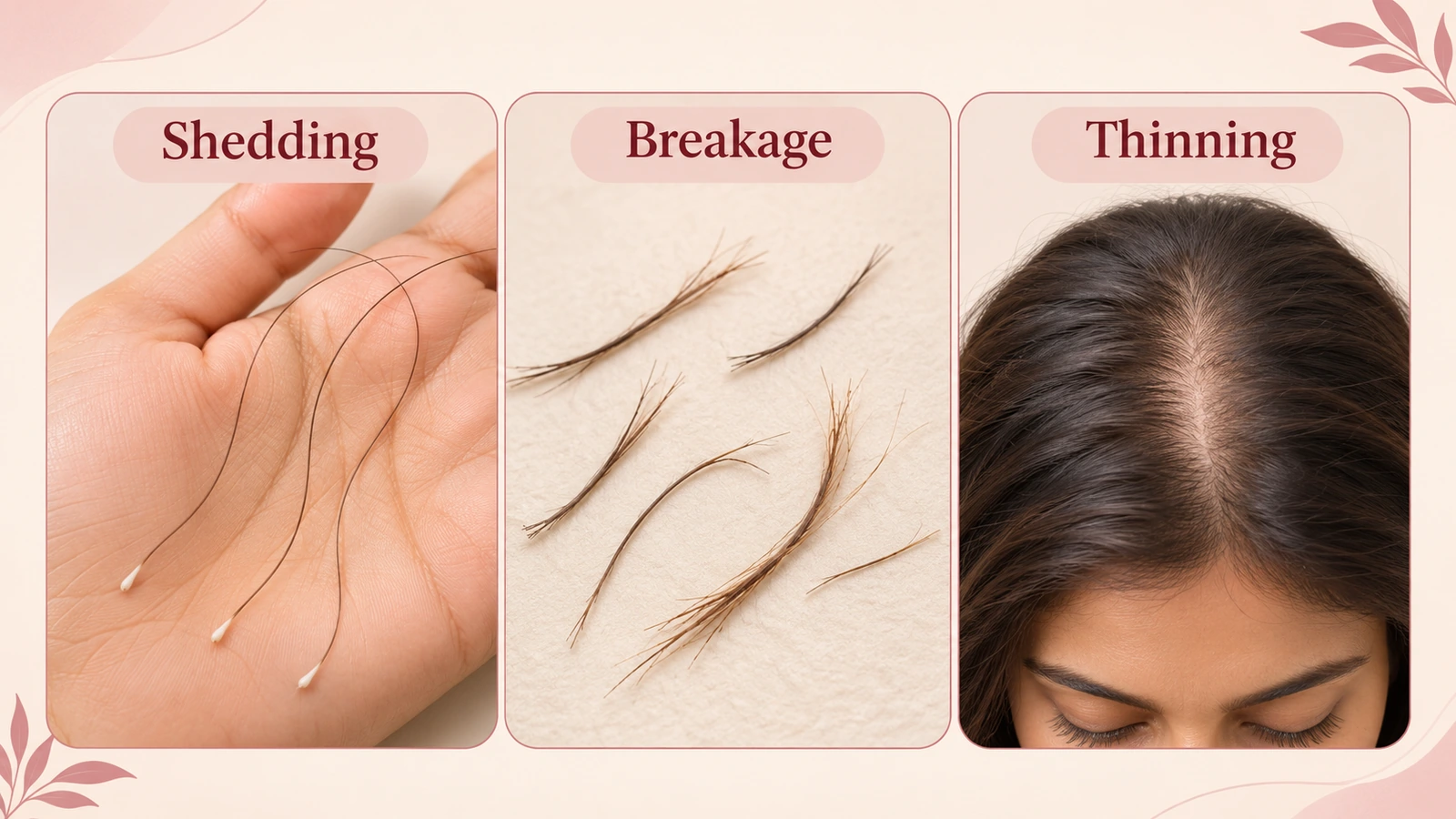
Several patterns are easy to confuse:
| What you notice | What it may mean | Useful next step |
|---|---|---|
| Long, full-length strands coming out while washing or brushing | Normal or excessive shedding | Consider recent stress, fever, childbirth, dieting or new medicines |
| Short pieces, split ends or uneven snapped strands | Breakage of the hair shaft | Reduce friction, heat, harsh treatments and forceful detangling |
| Gradually widening part, thinner ponytail or increasingly visible scalp | Progressive thinning; sometimes female-pattern hair loss | Arrange a dermatologist assessment rather than waiting for a home remedy to work |
| Smooth round bald patch, painful scalp or scaling with hair loss | A condition requiring medical evaluation | Seek prompt professional assessment |
Your next move: a 60-second decision guide
- Mostly short snapped hairs after colouring, straightening or vigorous brushing? Start with gentler conditioning, detangling and less heat; these changes protect the strands you still have.
- A noticeable increase in full-length shedding a few months after childbirth, fever, surgery or rapid weight loss? Note the timeline and any other symptoms. Temporary shedding is possible, but seek an assessment if it is persistent, worsening or concerning.
- A widening part, thinning crown or a ponytail that has become progressively smaller? Book a dermatologist assessment. Female-pattern hair loss is one possibility, but appearance alone cannot confirm it.
- A new smooth bald patch, painful scalp, inflammation or scaling with hair loss? Seek prompt medical evaluation instead of treating it as routine breakage.
These categories can overlap: someone may have hair breakage and a medical cause of thinning. This guide is for choosing a sensible next step, not self-diagnosing. 1 2 5 7
Simple at-home check: Look at your centre part and hairline in consistent lighting once a month—not every day. Note whether the overall pattern is changing. A photo can help you describe the change to a dermatologist, but it cannot diagnose its cause.
Why does hair fall happen in women?
Different triggers affect hair in different ways. Here are some of the more common possibilities.
1. Temporary shedding after a physical or emotional trigger
Illness with fever, childbirth, surgery, considerable stress and rapid weight loss can trigger telogen effluvium, a type of excess shedding. It often becomes noticeable a few months after the event. When the trigger has passed, fullness often returns gradually, although the timing varies. 1
2. Female-pattern hair loss
Gradual thinning around the centre part or crown can be an early sign of female-pattern hair loss. Genetics and hormonal influences are involved, and simply switching to a natural shampoo will not reliably reverse it. Effective treatments exist, so earlier diagnosis can be valuable. 5
3. Nutritional problems or restrictive eating
Inadequate food intake, insufficient protein and certain nutritional deficiencies may contribute to shedding. Iron deficiency is one possibility, particularly for women with heavy menstrual bleeding, but not every person with hair fall is iron-deficient. Only appropriate assessment can establish whether supplementation is needed. 3 6
4. Thyroid disorders, hormonal changes and medications
Thyroid disorders and hormonal conditions, including polycystic ovary syndrome (PCOS), can be associated with hair thinning. Certain medicines can also affect hair. If thinning comes with irregular or heavy periods, unusual fatigue, feeling unusually cold, acne or other new health concerns, tell your clinician. These symptoms have many possible explanations and do not by themselves establish PCOS or a thyroid disorder. Do not stop prescribed medication yourself. 1 7 13 14
5. Hair styling and scalp problems
Tight ponytails, repeatedly pulled braids, extensions, chemical services and high heat can damage the shaft or place tension on the follicles. Itching, redness, pain, flaking or inflamed patches also deserve attention; scalp disease is not something a DIY mask should be expected to fix. 3 4 8
15 practical ways to reduce hair fall and avoidable damage
The following advice is arranged around what you can realistically control. Some steps prevent breakage; others support overall health or help you recognise when medical treatment matters. None is a universal cure for all forms of alopecia.
1. Identify whether the problem is shedding, breakage or thinning
Before buying a treatment, observe the pattern. Full-length hairs after a recent illness suggest a different problem from short pieces after straightening or a steadily widening centre part. Use the table above to decide whether to adjust your routine or seek an assessment. If you are uncertain, a dermatologist can examine the scalp and hair. 1 2
2. Think back over the previous few months
Make a short timeline of major illnesses, fever, childbirth, rapid weight change, severe stress, new medications and changes to your hair routine. Temporary shedding can lag behind its trigger, so what happened two or three months earlier may be relevant. Keep the notes for a medical appointment rather than assuming a single event caused the loss. 1
3. Shampoo as often as your scalp needs
Daily shampooing does not automatically make hair thinner. If your scalp gets oily quickly, frequent cleansing may suit you; if your hair is dry or tightly curled, you may need a different schedule. Use a shampoo that cleans comfortably without leaving the scalp irritated. Concentrate shampoo on the scalp rather than repeatedly scrubbing the lengths. 4
For a typical oily-to-normal scalp: Wash when oily, sweaty or uncomfortable. You do not have to ‘train’ the scalp by enduring days of buildup, and you do not have to wash every day if it is unnecessary.
4. Condition the lengths after washing
A conditioner helps reduce tangles, friction and broken strands. For fine or straight hair, focus on the mid-lengths and ends; for drier or curlier hair, apply according to the hair’s needs. A lightweight leave-in conditioner or detangler may make fragile hair easier to handle. Conditioner improves manageability; it is not a treatment for follicle-related hair loss. 3 4
5. Detangle slowly, starting at the ends
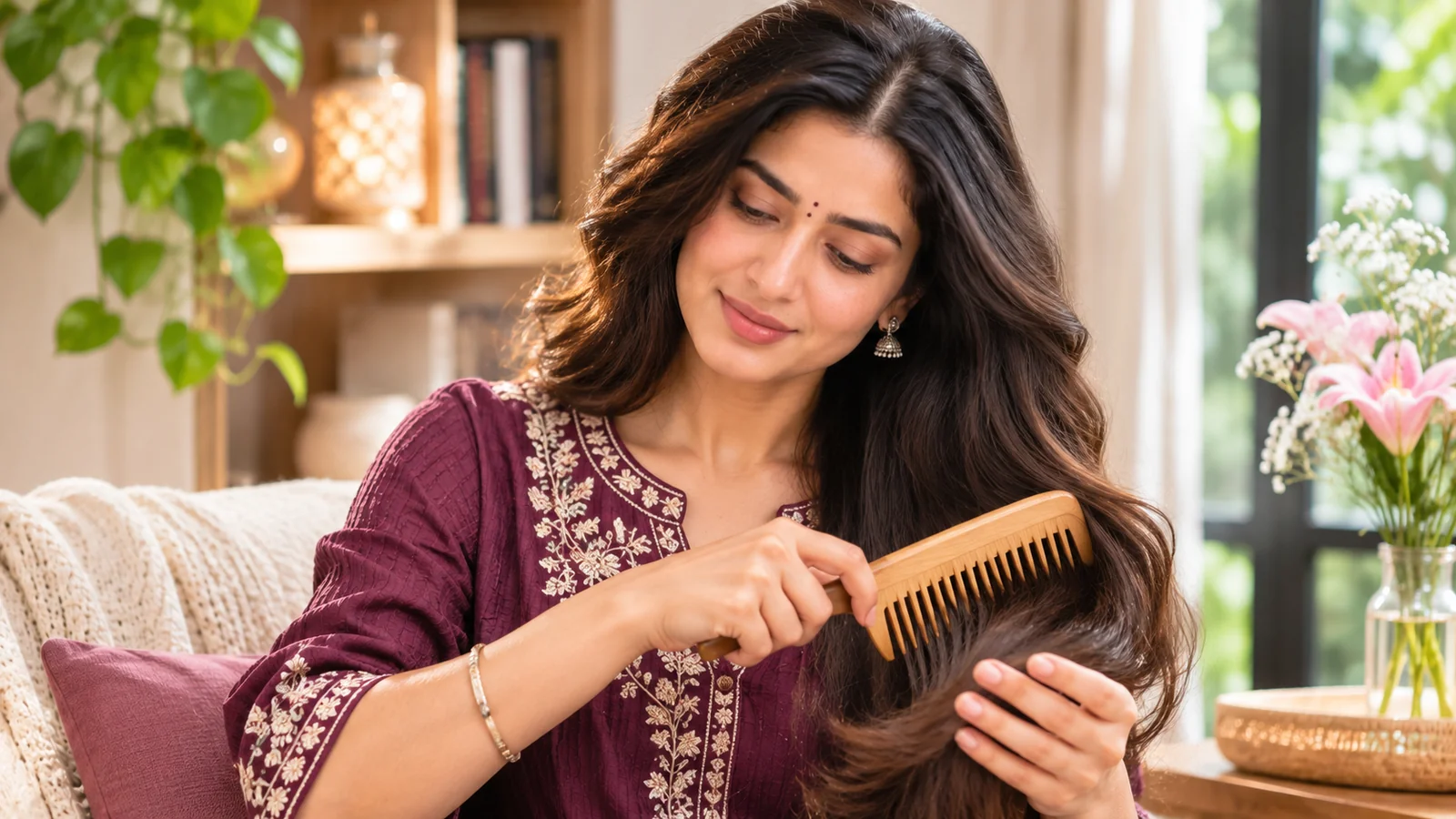
Use a wide-tooth comb or a suitable detangling brush. Work through small sections without pulling from the roots. Straight hair is often easier to comb once it has dried slightly; textured or tightly curled hair may detangle better while conditioned and wet. The aim is less mechanical damage, not a fixed number of brush strokes. 4
6. Replace rubbing with gentle drying
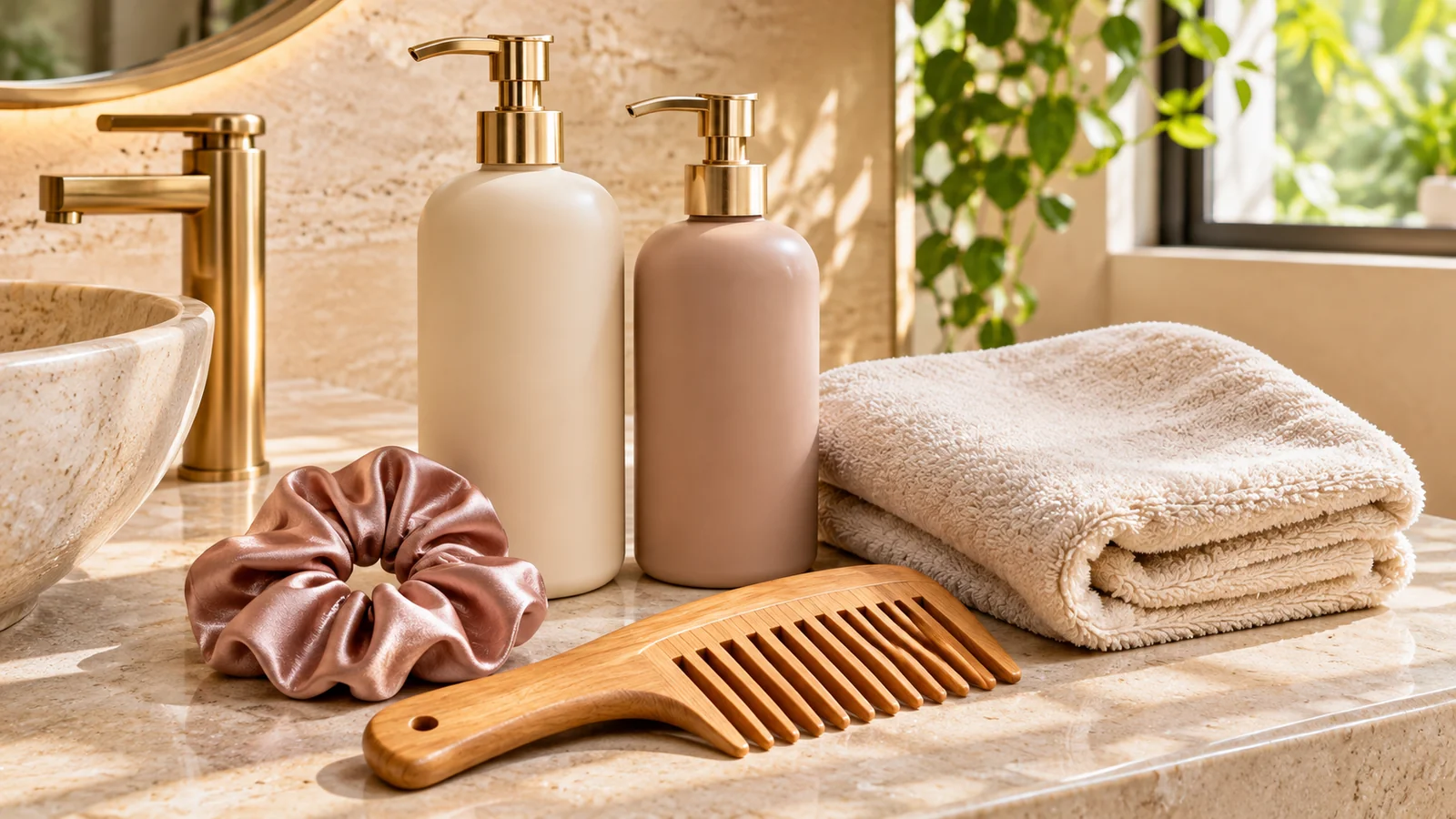
Blot excess water with a soft towel or cotton T-shirt instead of vigorously rubbing wet hair. A microfiber towel can make drying more convenient and may reduce the need for prolonged blow-drying. This can make wet hair easier to handle, but neither a microfiber towel nor a special pillowcase is a medical treatment for hair loss. 3
7. Turn down the heat—and use it less often
Frequent flat-ironing, curling and high-temperature blow-drying can weaken hair. Try partial air-drying, lower heat settings and shorter styling sessions. When you use heated tools, follow their safety guidance and consider heat-protectant products. Hair can look smoother immediately after styling even when repeated heat is causing damage underneath. 3 4
8. Loosen hairstyles that pull at your hairline
A tight bun, braid, ponytail or extension style should not hurt. Repeated tension can lead to traction alopecia, sometimes becoming permanent if ignored. Choose softer ties, reduce weight from extensions and rotate hairstyles that do not tug on the same areas. Pain, tenderness or thinning at the edges is a signal to act. 8

9. Take a break from aggressive chemical treatments
Bleaching, repeated colouring, relaxing and chemical straightening can increase dryness and breakage. If your hair is already fragile, postpone unnecessary services and seek a professional assessment of its condition before another treatment. Avoid layering several harsh processes close together. 3
10. Eat enough protein every day
Hair is made largely of keratin, a protein, but that does not mean eating extra protein beyond your needs will force more growth. What matters is avoiding an inadequate diet. Include protein regularly—such as dal, chana, rajma, paneer, curd, tofu, eggs, fish or other foods that suit your preferences and health needs. If you have a restrictive diet or medical condition, ask a clinician or registered dietitian for individual advice. 3
Easy Indian meal idea: Dal or chole with roti, a bowl of curd and vegetables makes a more realistic habit than an expensive ‘hair-growth’ superfood.
11. Choose iron-rich foods, but don’t self-prescribe iron tablets
Iron-deficiency anaemia can occur in people with heavy periods, pregnancy-related demands or insufficient dietary intake. Foods such as lentils, beans, fortified cereals, leafy greens and animal-source foods, where appropriate, can contribute iron. Pairing plant-based iron sources with vitamin C-rich foods, such as amla, guava, citrus or capsicum, can improve absorption. 6
If fatigue, heavy periods or persistent hair shedding make you concerned about deficiency, discuss testing with a clinician. There is no universal ferritin target that guarantees hair growth, and excess supplemental iron can be harmful. 6

12. Skip routine ‘hair gummies’ unless there is a reason
Biotin, zinc, selenium, vitamin D and other nutrients all have roles in health, but a glossy supplement label does not prove that it will regrow hair in someone without a deficiency. Too much of some nutrients can contribute to harm. High-dose biotin can also interfere with certain laboratory tests, including thyroid tests. 3 9
Tell your clinician about all supplements before blood tests or treatment. Correct a documented deficiency rather than stacking products ‘just in case.’
13. Be gentle with oils, masks and scalp massage
A small amount of oil or a conditioning mask on the hair lengths may help some people manage dryness and tangling. A gentle scalp massage can feel relaxing, but there is not enough clinical evidence to recommend it as a reliable treatment for female hair loss. A small study of scalp massage examined nine men, so its results should not be stretched into a universal regrowth promise. 10
Avoid hot-oil treatments, vigorous scratching, undiluted essential oils and mixtures that cause itching or burning. Stop a product if irritation develops. If you enjoy DIY care, see our easy DIY hair masks—use them for conditioning, not as substitutes for medical treatment.
14. Support recovery with sustainable habits
Persistent stress, extreme dieting and poor recovery after illness can affect overall health. Aim for enough food, regular meals, comfortable physical activity, sleep that fits your needs and manageable stress-relief habits. A short walk, journaling or breathing practice may be helpful for wellbeing, but none has been proven to reverse hair loss on its own. 1
Avoid crash diets marketed as quick fixes. If shedding followed substantial weight loss, discuss the change and your nutrition with a healthcare professional.
15. Get an early diagnosis when the pattern worries you
This is arguably the most important tip. If your centre part widens, hairline recedes, bald patches appear, scalp becomes painful or inflamed, or shedding continues without a clear explanation, arrange a dermatologist consultation. Early assessment can identify conditions for which lifestyle changes alone are insufficient. A clinician may examine your scalp and, depending on the history, consider tests for issues such as iron deficiency or thyroid dysfunction. 2 7
Which natural hair-fall remedies actually have evidence?
Online advice often treats every ingredient as if it were equally proven. It is not. Here is a more useful comparison.
| Habit or remedy | What the evidence supports | Bottom line |
|---|---|---|
| Gentle washing, conditioning, careful detangling and less heat | Dermatologist guidance for reducing damage and breakage 3 4 | Worth doing for more manageable, less fragile hair |
| Avoiding tight hairstyles | Helps prevent traction-related hair loss 8 | Important, especially if edges or hairline are thinning |
| Correcting a genuine nutritional deficiency | Appropriate when a deficiency is identified 3 6 | Useful when indicated; unnecessary supplements are not a shortcut |
| Rosemary oil | One six-month comparative trial in androgenetic alopecia showed increased hair counts in both rosemary-oil and 2% minoxidil groups, without a significant difference between groups 11 | Preliminary, not proof that rosemary is equivalent to an established treatment |
| Onion juice | A small study published in 2002 examined people with patchy alopecia areata, not ordinary shedding or female-pattern thinning 12 | Insufficient for routine use; irritation and odour are real downsides |
| Scalp massage | Very small study in nine men, with limited generalisability 10 | Optional for comfort; don’t depend on it for regrowth |
| Green-tea rinses and head-down ‘inversion’ methods | No convincing clinical evidence established for reliable hair regrowth | Do not use as primary treatment |
| Cold-water rinses and special pillowcases | May fit personal preferences or reduce tangling for some people, but strong regrowth claims are unsupported | Comfort choices, not cures |
What about rosemary oil?
The widely shared study comparing rosemary oil with 2% minoxidil included 100 people with androgenetic alopecia. Hair counts increased in both groups after six months, and the difference between groups was not statistically significant. But a single comparative trial does not establish equivalence, and its findings do not show that rosemary oil works for every form of shedding. 11
It also does not validate every homemade rosemary infusion, essential-oil blend or overnight recipe circulating online. Concentrated essential oils may irritate the scalp; avoid applying them undiluted. If you’re considering any topical remedy while pregnant, breastfeeding or treating a scalp condition, speak to your clinician first.
Does onion juice regrow hair?
A 2002 study reported regrowth in some people with alopecia areata, an autoimmune condition that often causes round patches. The study was small and does not demonstrate that onion juice helps common female-pattern thinning or temporary telogen effluvium. Because it can irritate the skin and eyes, it is not a first-choice home treatment. 12
WomenSutra’s position: An ingredient being ‘natural’ does not mean it is safe for every scalp—or effective for every cause of hair loss.
A realistic 7-day hair-care routine
If you want a place to start, use this as a flexible breakage-prevention routine, not a seven-day regrowth challenge.
| When | Practical action |
|---|---|
| Day 1 | Note your hair-loss pattern. Take one photo of your part in consistent lighting, if helpful. |
| Day 2 | Review shampoo and conditioner. Choose products suitable for your scalp and hair texture. |
| Day 3 | Practise gentler detangling; avoid unnecessary pulling or dry brushing of tightly curled hair. |
| Day 4 | Wear a loose braid, ponytail or open hairstyle that does not pull at the hairline. |
| Day 5 | Check whether meals contain adequate protein and varied, iron-containing foods. |
| Day 6 | Give your hair a lower-heat or heat-free styling day; avoid additional harsh processing. |
| Day 7 | Review the past few months for possible triggers; decide whether a medical assessment is appropriate. |
Repeat the useful habits, not the photo-taking. Hair growth is slow, and daily checking can make normal variations feel alarming. If medical treatment is needed, a good routine can support it but cannot replace it.
When home care is not enough: treatments worth discussing
The right treatment depends on whether you have temporary shedding, female-pattern hair loss, alopecia areata, a scalp disorder or another cause. A dermatologist may recommend monitoring, treatment of an underlying condition, or a specific therapy. 2 7
For female-pattern hair loss, topical minoxidil is among the established options and may help maintain or increase hair growth in some women. It takes months to assess benefit, needs continued use to maintain results, and can cause side effects such as irritation. It is not a universal treatment for unexplained shedding. People who are pregnant, planning pregnancy or breastfeeding should avoid minoxidil and discuss safe options with their clinician. 5 7
Other options depend on the diagnosis and individual circumstances; some people also use cosmetic hair toppers or patches for coverage. These can change appearance but do not treat the underlying cause. Choose them based on comfort and practical needs, not claims of guaranteed hair recovery.
When should you see a dermatologist about hair fall?
Book an assessment sooner rather than later if you notice:
- A part that is becoming progressively wider or visible scalp at the crown.
- A sudden bald patch or a rapidly changing hairline.
- Scalp pain, redness, significant itching, crusting or scaling alongside hair loss.
- Persistent heavy shedding, particularly if you cannot identify a temporary trigger.
- Hair loss with menstrual changes, marked fatigue or other symptoms that may point to an underlying condition.
- Hair loss that is causing significant distress or affecting your daily life.
There is no need to wait until you have counted a particular number of fallen hairs for three months. A dermatologist can help distinguish treatable patterns, and some forms of loss are harder to reverse if diagnosis is delayed. 2 7
Frequently asked questions
How can I stop hair fall immediately?
You usually cannot stop true shedding overnight because hair cycles respond over time. You can reduce avoidable breakage immediately by loosening hairstyles, handling wet hair gently and reducing heat. If the loss is sudden or patchy, seek medical assessment. 1 3
Does washing hair every day cause hair fall?
Not necessarily. Washing frequency should follow your scalp’s oiliness and your hair type. The loose strands you see while washing may already have been in the shedding phase. Use a gentle routine and avoid vigorous scrubbing. 4
How much hair fall is normal daily?
About 50–100 hairs a day is commonly cited as normal shedding. But the number varies, and looking at the pattern of thinning is often more useful than counting every strand. 1
Can hair grow back after excessive shedding?
Often, yes, when a temporary trigger such as illness or childbirth has passed. AAD notes that hair commonly regains its usual fullness over several months, although persistent shedding and other diagnoses may follow a different course. 1
What if my hair is thinning at the centre part?
A progressively widening part can be a sign of female-pattern hair loss, though it is not diagnostic on its own. It is worth arranging a dermatologist visit rather than relying on masks or oils. 5
Which vitamin deficiency causes hair loss in women?
There is no single vitamin deficiency responsible for all hair loss. Depending on the person, nutritional issues such as low iron or inadequate intake of other nutrients may contribute. Your clinician can decide what testing is appropriate based on symptoms and history. 3 6
Does biotin make hair grow faster?
Biotin is necessary for normal health, but there is little evidence that biotin supplements improve hair in people without a deficiency. High doses can also interfere with some lab tests. 9
Is coconut oil good for hair fall?
Some people find coconut oil useful for making dry lengths easier to manage, but it should not be presented as a proven treatment for hair loss from the follicles. Apply sparingly if it suits your hair, stop if it irritates your scalp, and do not rely on it instead of diagnosing progressive thinning.
Can stress alone trigger hair fall?
Yes, major physical or emotional stress can precede temporary excessive shedding, often by a few months. But hair loss has many other causes, so a history of stress does not prove that stress is the only explanation. 1
Is hair fall after childbirth normal?
Increased shedding a few months after delivery is common and is often temporary. The AAD explains that postpartum shedding frequently peaks around four months and gradually improves as the hair cycle readjusts. If you notice patchy loss, scalp symptoms or shedding that worries you, seek a clinician’s advice rather than assuming every change is postpartum shedding. 1
Do I need a sulphate-free shampoo to prevent hair fall?
Not automatically. A shampoo’s suitability depends on how it cleanses your scalp and how your hair responds, not a blanket rule about one ingredient. If a formula leaves your scalp irritated or your lengths dry, choose a gentler option and pair it with conditioner. A sulphate-free label by itself does not prove the product treats hair loss. 3 4
What should I do about frizzy or flat hair while recovering from shedding?
Use gentle conditioning and heat-conscious styling to improve appearance while you address the underlying cause. If your main concern is making fine hair look fuller, read our guide to increasing hair volume. Volume tricks improve appearance; they are not the same as restoring follicles.
The bottom line
The best natural approach to hair fall starts with the cause, not a miracle ingredient. If your hair is breaking, gentle cleansing, conditioning, careful detangling and less tension can help. If your body is recovering from a trigger, nourishing meals and time may support recovery. If you notice progressive thinning, bald patches or an uncomfortable scalp, get a diagnosis early. That is a more dependable plan than trying twenty unrelated remedies at once.
How this guide was prepared
This update draws on publicly available dermatologist guidance from the American Academy of Dermatology, NIH nutrition fact sheets, information on thyroid and PCOS conditions from the NHS and WHO, and the published studies discussed above. We distinguish recommendations for protecting hair shafts from treatments for diagnosed follicle-related hair loss. We have not conducted a trial of any remedy or represented this article as a clinician-reviewed guide.
Sources and further reading
The numbered source links throughout the article open the relevant guidance or study. The references below also let readers inspect the original evidence and its limitations.
- American Academy of Dermatology. Do you have hair loss or hair shedding?
- American Academy of Dermatology. Hair loss: Overview
- American Academy of Dermatology. Hair loss: Tips for managing
- American Academy of Dermatology. Tips for healthy hair
- American Academy of Dermatology. Thinning hair and hair loss: Could it be female pattern hair loss?
- NIH Office of Dietary Supplements. Iron: Fact Sheet for Consumers
- American Academy of Dermatology. Hair loss: Diagnosis and treatment
- American Academy of Dermatology. Hairstyles that pull can lead to hair loss
- NIH Office of Dietary Supplements. Biotin: Fact Sheet for Consumers
- Koyama T et al. (2016). Standardized scalp massage results in increased hair thickness. Eplasty. Small preliminary study.
- Panahi Y et al. (2015). Rosemary oil vs minoxidil 2% for androgenetic alopecia: A randomized comparative trial. SKINmed.
- Sharquie KE, Al-Obaidi HK. (2002). Onion juice as a topical treatment for alopecia areata. Journal of Dermatology. Small condition-specific study.
- NHS. Underactive thyroid (hypothyroidism): symptoms and diagnosis.
- World Health Organization. (2026). Polycystic ovary syndrome (PCOS): fact sheet.
Editorial note: WomenSutra publishes beauty and wellness education, not personalised medical advice. Content checked and editorially revised November 17, 2026. The publishing editor must confirm a truthful author byline. This article has not received a qualified dermatologist’s review and must not be labelled "medically reviewed" unless that review actually occurs.


1 comment