

There is something satisfying about mixing a face pack from ingredients already in your kitchen. If you are curious about a coffee face mask at home, you don’t need a complicated ingredient list or a gritty scrub. Start with a little plain, dissolved instant coffee, choose an add-in you know your skin tolerates, and make only enough for one use.
Here are 12 easy coffee face pack recipes, from the familiar coffee-and-honey mask to curd, aloe vera, besan and a few less-common variations. You’ll also learn which textures might suit your preferences, how to apply a mask gently and what coffee can—and cannot—realistically do for your skin.
A quick reality check: A homemade coffee mask is an optional beauty ritual, not a proven treatment for acne, dark spots, tanning or wrinkles. If you have sensitive, inflamed or broken skin, it is better to skip DIY masks.
Quick Answer: How to Make a Coffee Face Mask at Home
The easiest starting point is a coffee and honey face mask.
| Ingredient | Quantity |
|---|---|
| Plain, unsweetened instant coffee | ¼ teaspoon |
| Lukewarm water | ½–1 teaspoon, enough to dissolve the coffee |
| Plain honey | 1 teaspoon |
- Dissolve the instant coffee completely in the lukewarm water. Let it cool to room temperature.
- Mix in the honey to make a smooth, spreadable layer.
- If you know you tolerate the ingredients and have tested the mixture cautiously on a small area, spread a thin layer over clean, intact skin. Keep away from your eyes and lips.
- For a first application, keep contact brief—about five minutes is a conservative suggestion, not a clinically established treatment time.
- Rinse gently with lukewarm water. Pat dry and follow with your usual moisturiser.
What to expect: A sticky, smooth mask that may leave skin feeling soft after rinsing. What not to expect: Overnight removal of dark spots or a medically proven glow treatment.
Before you begin: Use fresh ingredients and a clean bowl. Never apply a homemade mask to active rashes, sunburn, cuts or irritated skin. Wash it off immediately if it stings or itches. Do not save leftovers.
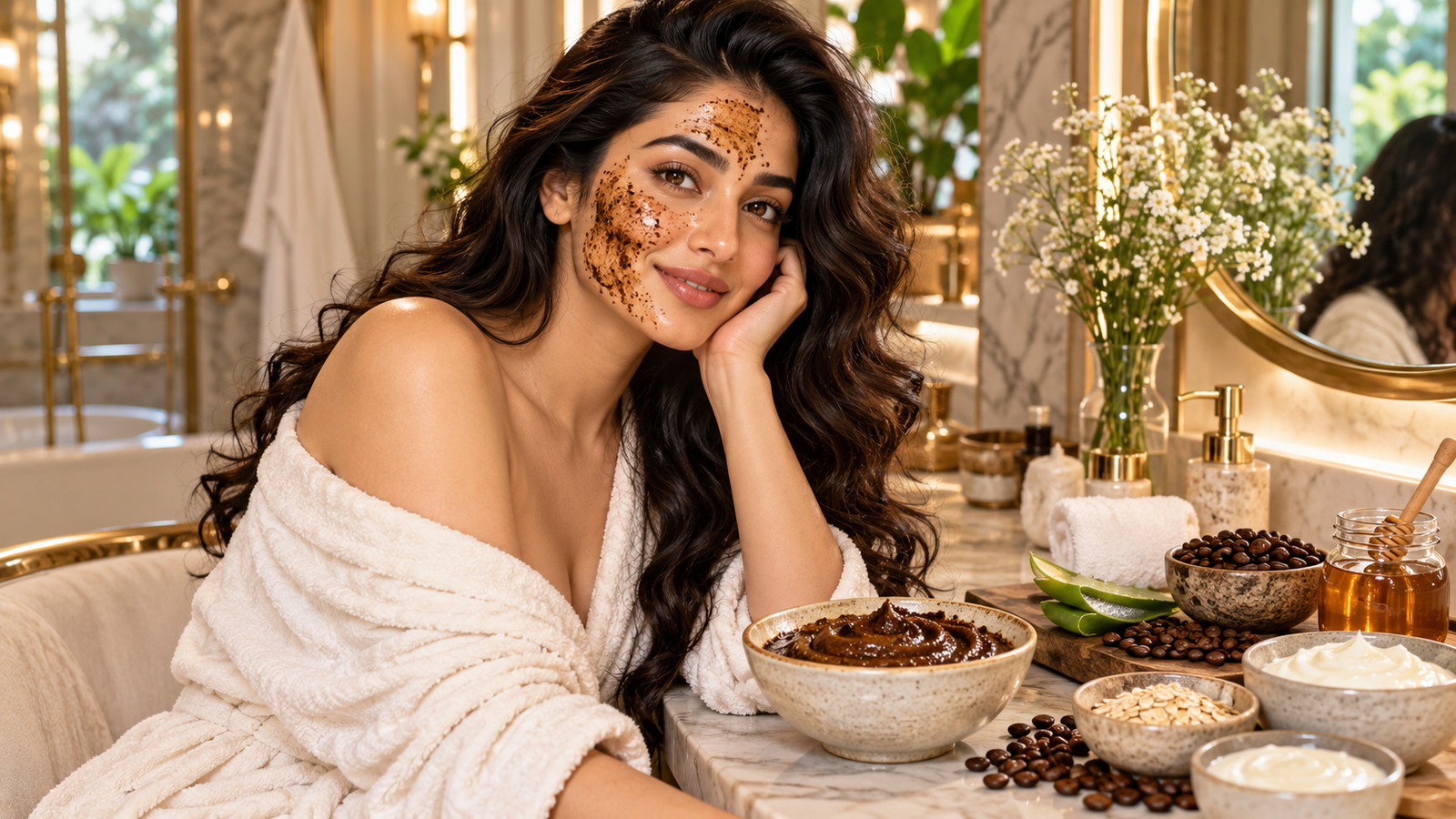
All 12 Coffee Face Mask Recipes at a Glance
Not sure which one to try? Choose by texture and ingredients you already tolerate, rather than expecting a recipe to treat a particular condition.
| # | Coffee face pack | Texture or reason to choose it | Important consideration |
|---|---|---|---|
| 1 | Coffee + honey | Smooth and slightly sticky | Avoid if allergic to honey or bee products |
| 2 | Coffee + curd (yogurt) | Creamy, easy to spread | Avoid with relevant dairy sensitivity |
| 3 | Coffee + aloe vera | Lightweight gel | Aloe and preservatives can still cause reactions |
| 4 | Coffee + finely milled oats | Soft, thicker paste | Never scrub with coarse oats |
| 5 | Coffee + besan | Traditional Indian-style pack | May feel drying; avoid with chickpea allergy |
| 6 | Coffee + multani mitti | Clay-like, less-greasy finish | Often too drying for dry or reactive skin |
| 7 | Coffee + cocoa + curd | Rich, creamy paste | Cocoa is not a substitute for sunscreen |
| 8 | Coffee + pumpkin | Smooth, seasonal option | Use plain, cooked, cooled pumpkin |
| 9 | Coffee + banana | Soft, fruit-based texture | Use a perfectly smooth mash |
| 10 | Coffee + cucumber + aloe | Cool-feeling, light gel | Not a treatment for sunburn |
| 11 | Coffee + avocado | Richer, buttery texture | May feel heavy on oily skin |
| 12 | Coffee + pasteurised milk + oats | Fluid, creamy oat pack | Avoid raw milk and dairy allergens |
One simple mixing rule for every recipe: Dissolve ¼ teaspoon of plain instant coffee in ½ teaspoon lukewarm water; let it cool fully before adding the listed ingredients. If a dry mixture is too thick, add water a few drops at a time. Use the mixture immediately, apply without rubbing and rinse gently. These quantities are practical DIY suggestions—not clinically tested formulas.
12 DIY Coffee Face Mask Recipes: Ingredients and Steps
1. Coffee and Honey Face Mask — The Simple Starter
Ingredients
- 1 batch of the dissolved coffee base described above
- 1 teaspoon plain honey
How to make it
- Combine the cooled coffee base and honey in a clean bowl.
- Stir until the colour is even and the mixture spreads easily.
- Apply a thin layer with clean fingers, keep it away from the eyes, then rinse gently after a brief application.
Why try this one? It requires just two main ingredients, and honey creates a soft, spreadable texture. It’s a practical first option if you already know your skin tolerates honey.
Texture tip: If the mixture drips, use slightly less water next time. Do not add ground coffee to thicken it.
Avoid if: You have a honey, bee-product or coffee allergy.

2. Coffee and Curd Face Pack — A Creamy Option
Ingredients
- 1 batch cooled coffee base
- 1 teaspoon fresh, plain, unsweetened, pasteurised curd (dahi) or yogurt
How to make it
- Whisk the curd so that there are no lumps.
- Stir in the cooled dissolved coffee until creamy.
- Spread lightly and rinse thoroughly; don’t let it dry into a crust.
Why try this one? Curd gives an easy-to-apply texture using an ingredient familiar in Indian households. Do not assume kitchen curd works like a precisely formulated lactic-acid product; its acidity and composition vary.
Texture tip: Thick curd tends to drip less than watery yogurt.
Avoid if: Dairy products irritate your skin or you have a relevant allergy.
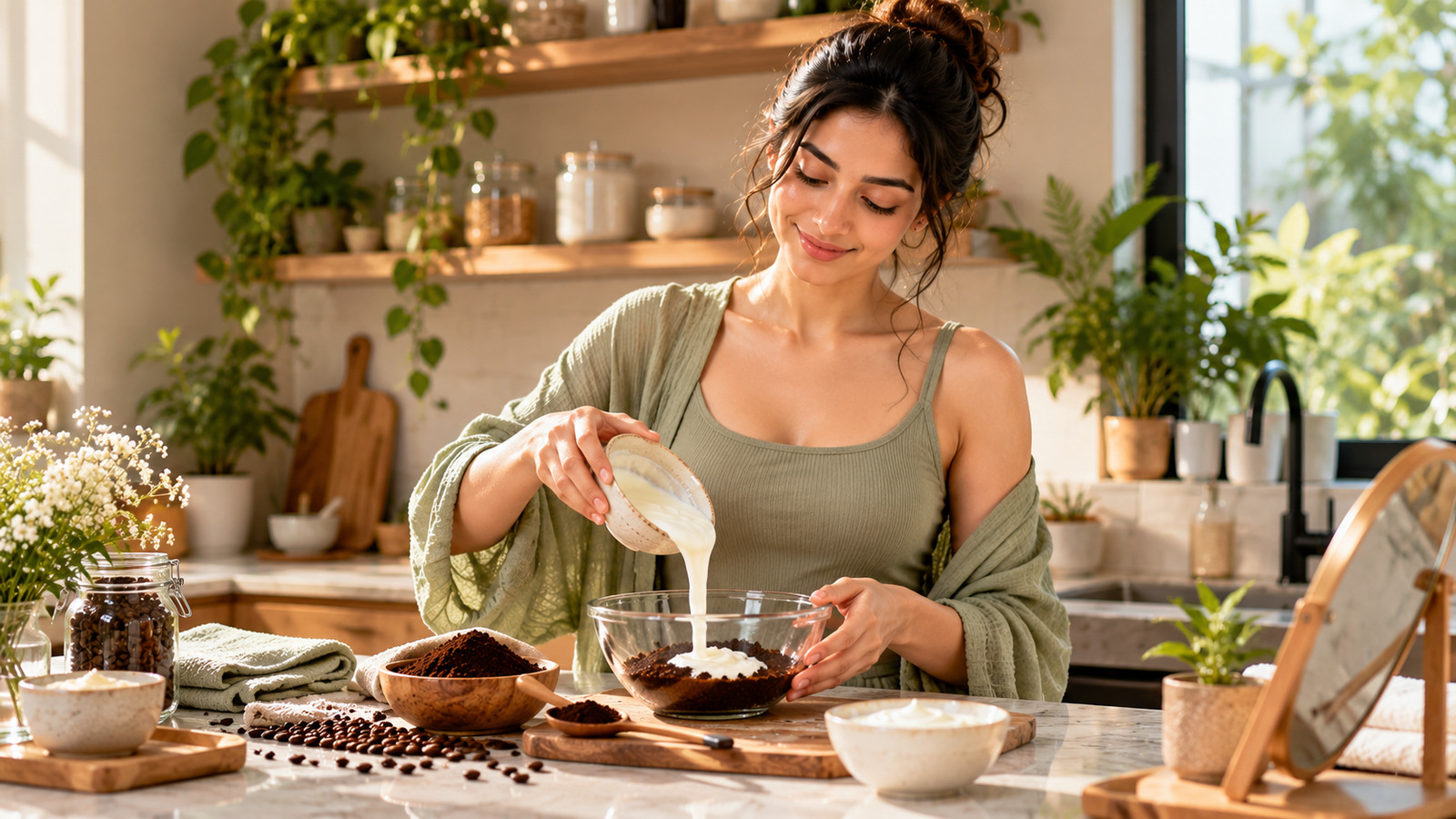
3. Coffee and Aloe Vera Face Mask — A Lightweight Gel
Ingredients
- 1 batch cooled coffee base
- 1 teaspoon fragrance-free, commercially prepared aloe vera gel
How to make it
- Put the aloe gel into a small bowl and loosen it gently with a spoon.
- Mix in the coffee base until the gel is evenly coloured.
- Apply a thin layer, then rinse without massaging the skin.
Why try this one? The gel feels lighter than honey or curd, which some people prefer in humid weather. The aloe-based texture is the attraction here; it is not a proven remedy for inflamed acne or sunburn.
Texture tip: Choose a simple, fragrance-free gel rather than a strongly scented or coloured version.
Avoid if: You have previously reacted to aloe, or your skin is currently burning, peeling or broken.
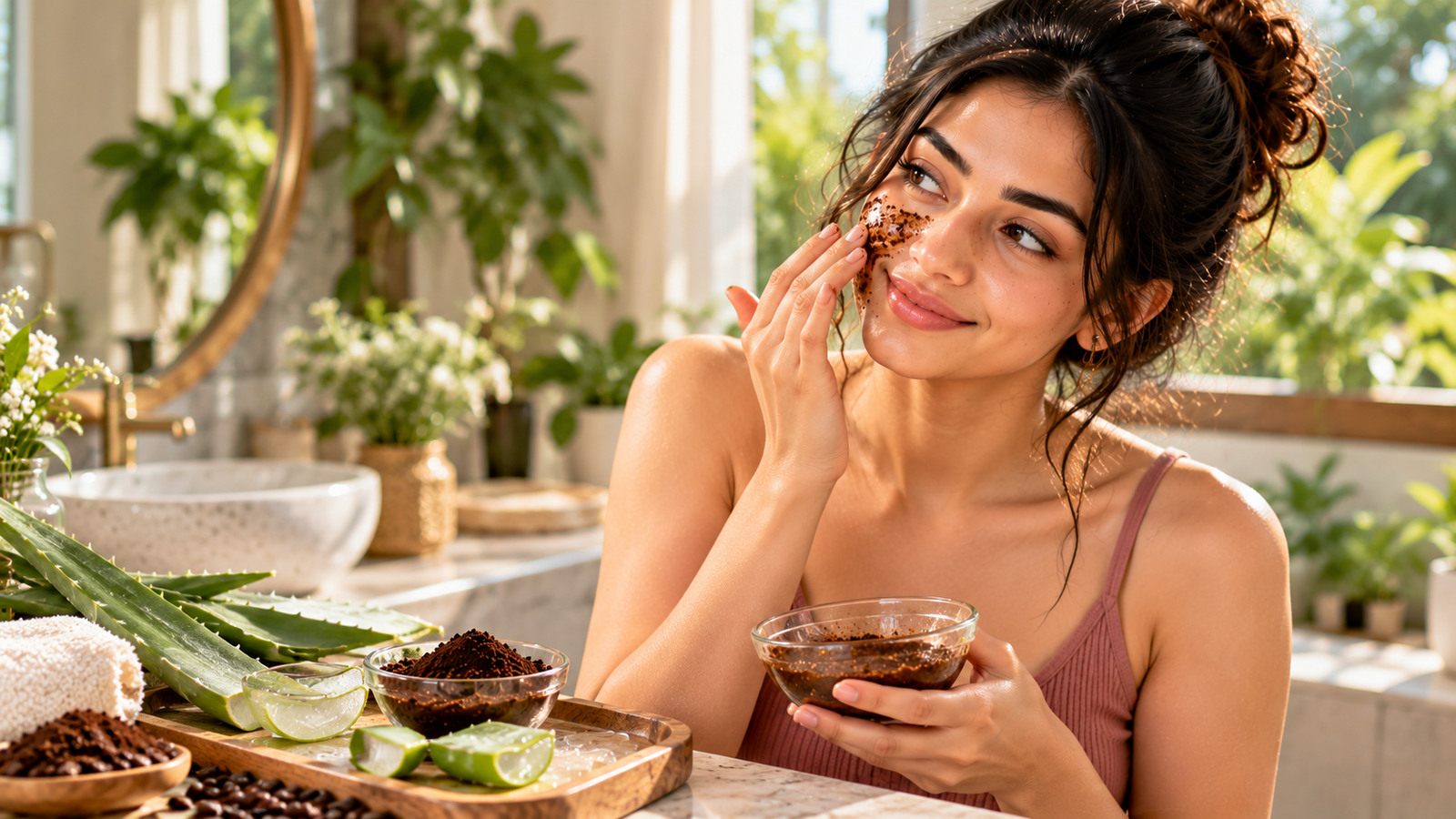
4. Coffee and Oat Face Mask — A Soft, Thicker Paste
Ingredients
- 1 batch cooled coffee base
- 1 teaspoon very finely milled, plain oat flour
- Up to 1 teaspoon additional water, as needed
How to make it
- Add the oat flour to the dissolved coffee and stir.
- Let it sit briefly so the oats absorb the liquid; add water drop by drop until spreadable.
- Smooth on without scrubbing, and rinse before the paste becomes firm.
Why try this one? The oats give the mask body without needing gritty coffee particles. Certain formulated colloidal-oatmeal products have documented skin-barrier benefits, but an ordinary homemade oat mixture should not be treated as equivalent.
Texture tip: If you can feel obvious flakes, mill the oats more finely or choose a different recipe.
Avoid if: You have an oat allergy or an active eczema flare.
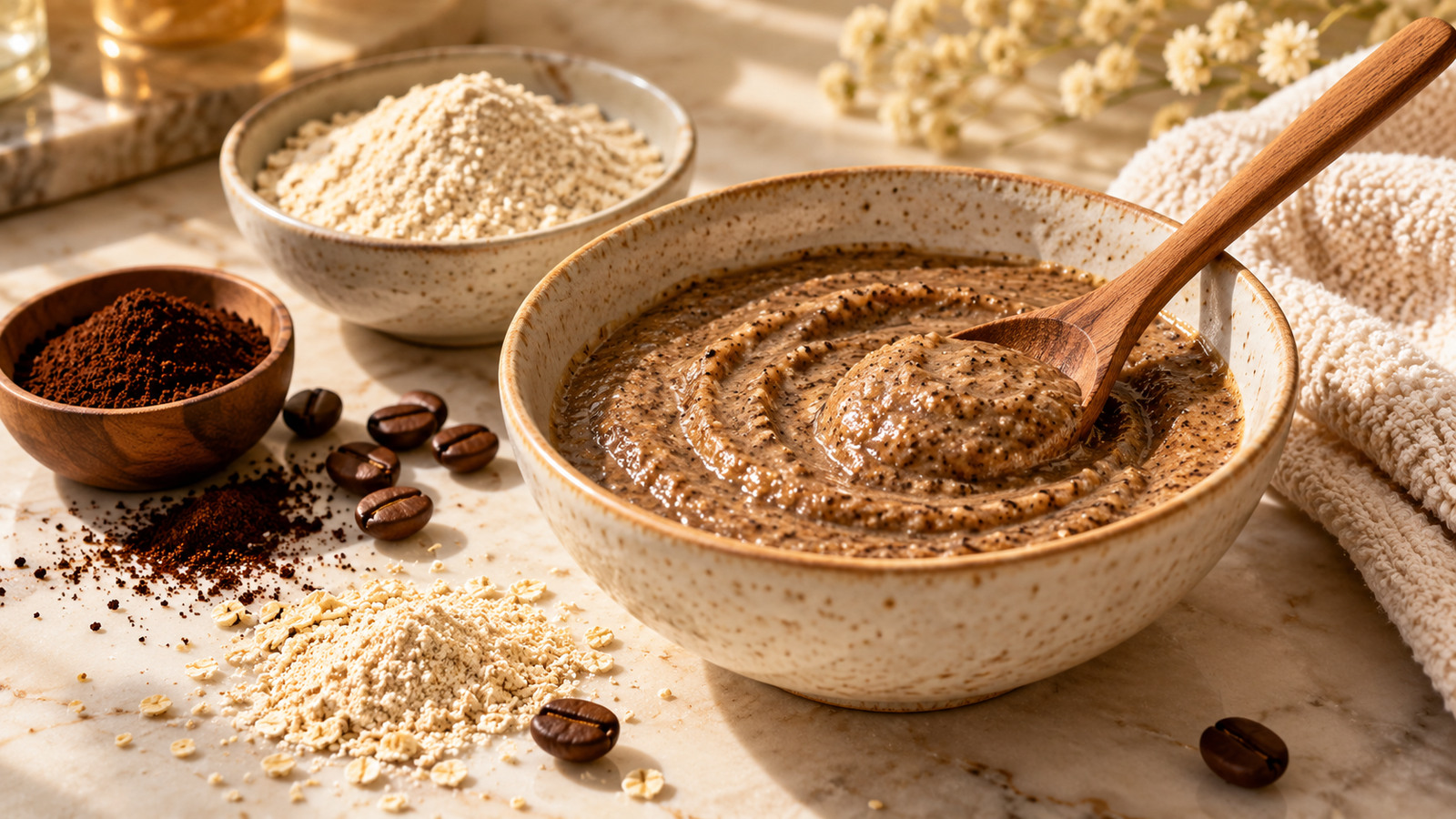
5. Coffee and Besan Face Pack — An Indian Beauty-Routine Classic
Ingredients
- 1 batch cooled coffee base
- ¾ teaspoon besan (gram flour)
- A few additional drops of plain water if needed
How to make it: Stir the besan into the coffee base until it becomes a smooth paste. Add a few drops of water only if needed. Apply gently, then rinse before it becomes stiff or flaky.
Why try this one? Besan is inexpensive and gives the mask a thicker, traditional ubtan-like feel. That doesn’t mean the combination has been shown to clear pores, fade pigmentation or cure pimples.
Watch for: Tightness or dryness after washing. Never rub the dried flour off to exfoliate.
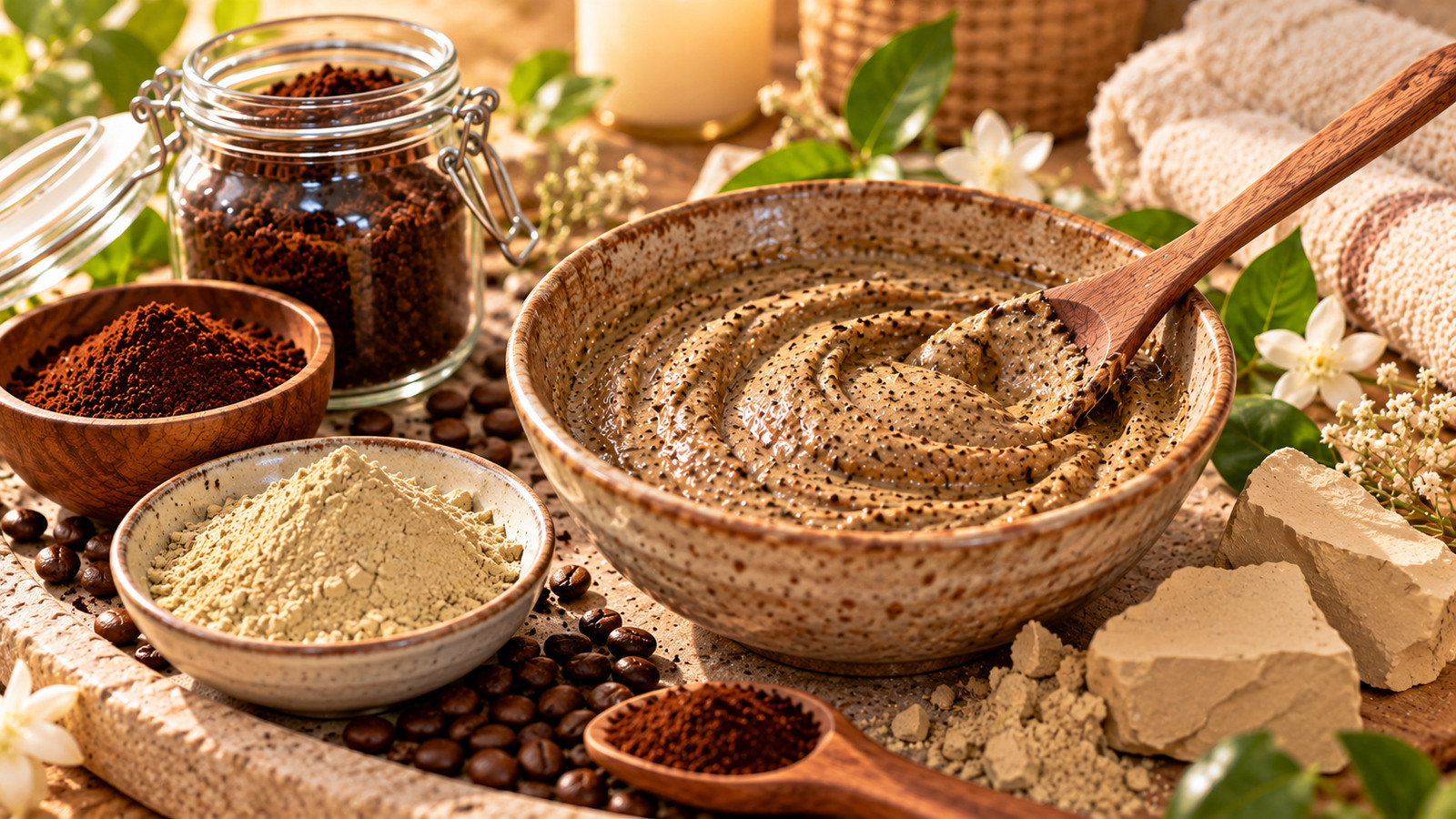
6. Coffee and Multani Mitti Face Pack — A Clay-Based Variation
Ingredients
- 1 batch cooled coffee base
- ½ teaspoon cosmetic-grade multani mitti (fuller’s earth)
- Enough extra water to make a thin, spreadable paste
How to make it: Combine the clay and coffee base, adding water slowly. Apply a light layer and remove gently while it is still slightly damp—don’t wait for a cracked, tight mask.
Why try this one? Clay masks may absorb some surface oil, and this version has a comparatively matte finish. It is not a detox treatment or an acne cure.
Watch for: Dryness. Skip clay-based DIY masks if your skin is already dry, peeling, sensitive or being treated with strong exfoliating products.
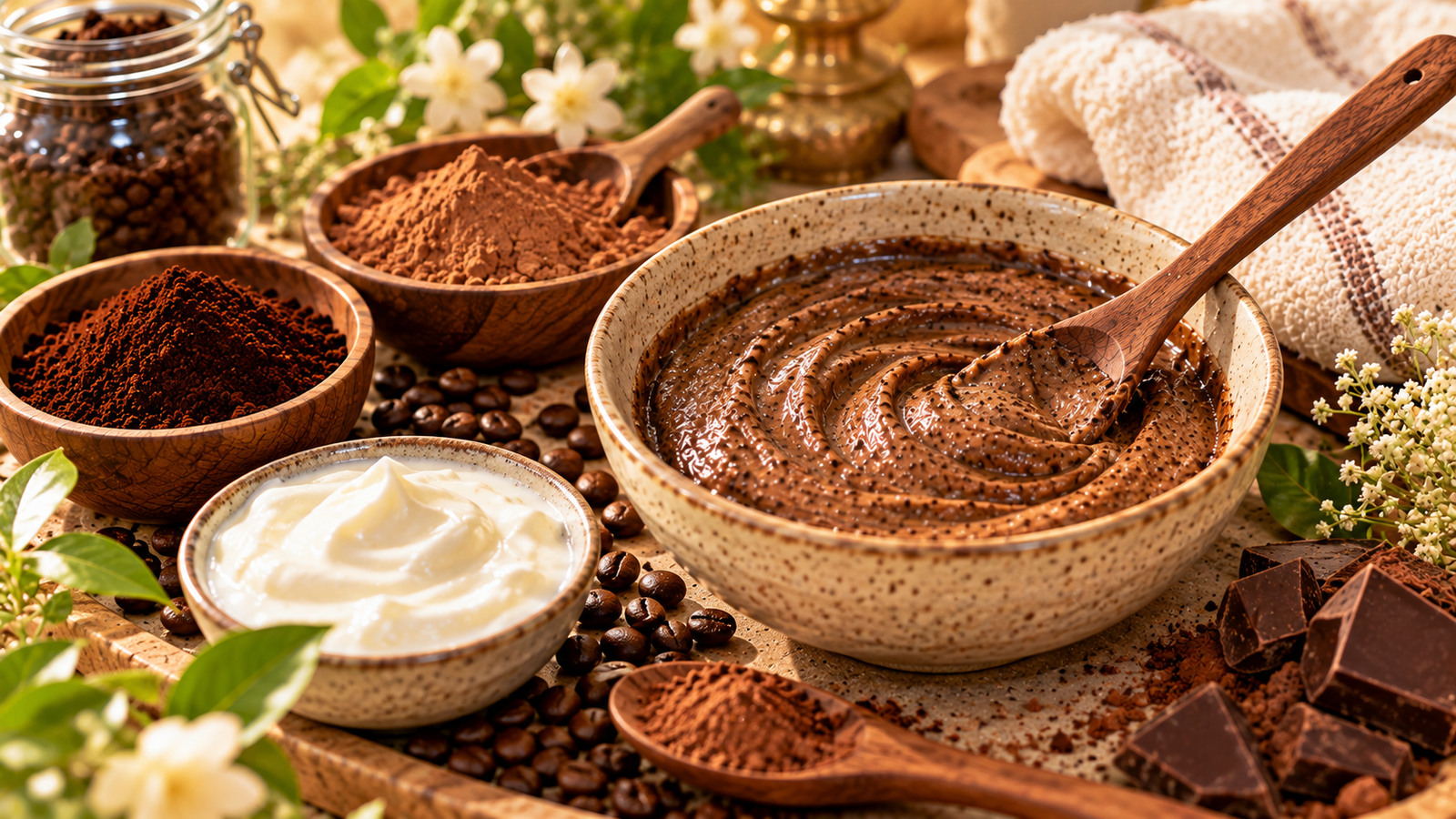
7. Coffee, Cocoa and Curd Mask — A Rich, Creamy Mix
Ingredients
- 1 batch cooled coffee base
- ½ teaspoon unsweetened cocoa powder
- 1 teaspoon plain, pasteurised curd or yogurt
How to make it: Mix the cocoa powder with the curd until no dry lumps remain. Add the dissolved coffee and stir into a chocolate-coloured cream. Apply thinly and rinse gently.
Why try this one? Mostly for the creamy texture and a fun, kitchen-spa experience. Although cocoa and coffee contain compounds studied as antioxidants, the mask has not been shown to prevent UV damage or skin ageing.
Watch for: Ingredient allergies and fragrance additives—use plain cocoa, not hot-chocolate mix.
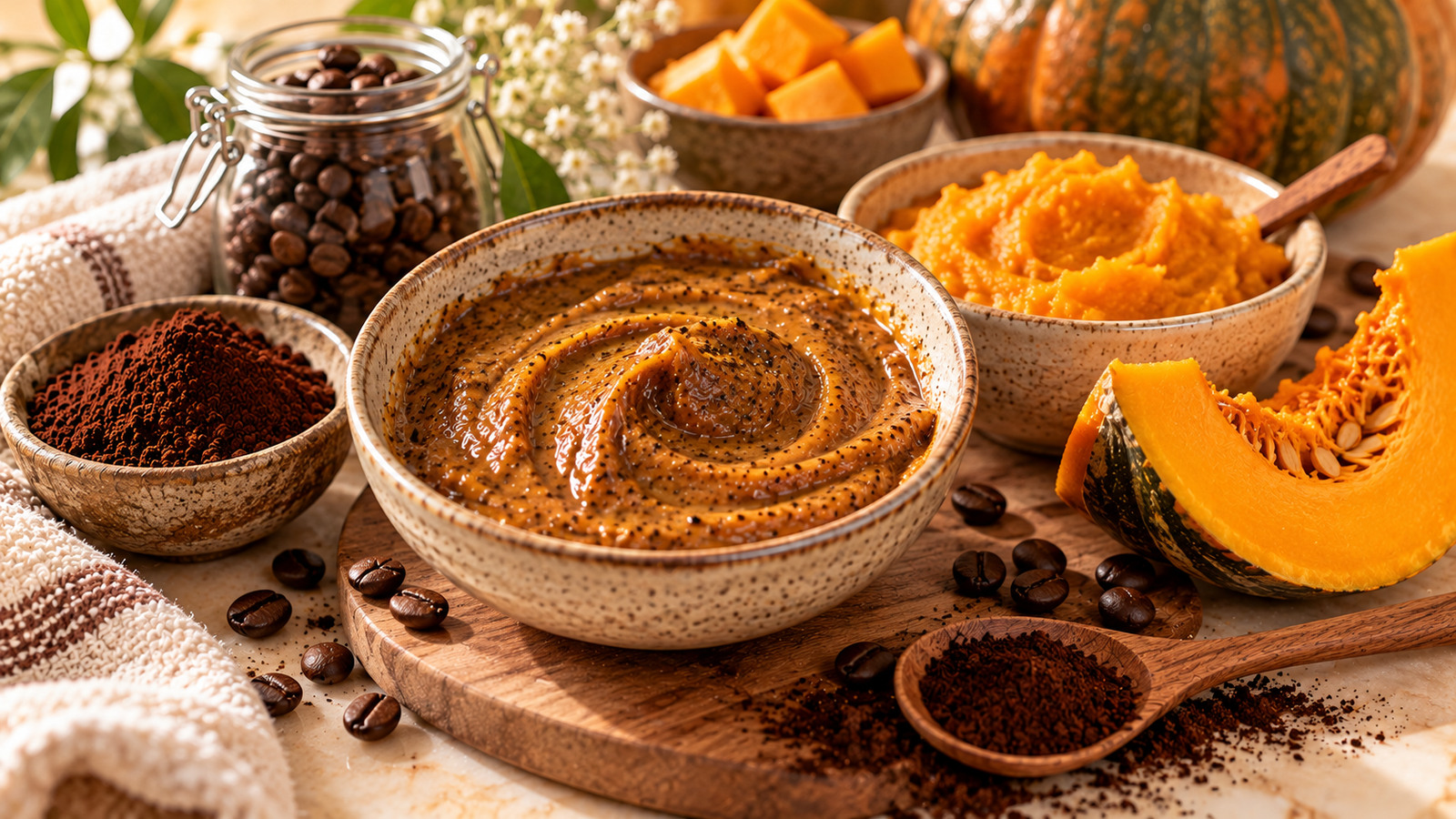
8. Coffee and Pumpkin Face Mask — A Seasonal Smooth Paste
Ingredients
- 1 batch cooled coffee base
- 1 teaspoon plain, fully cooked and cooled pumpkin purée
How to make it: Mash the pumpkin until completely smooth, then blend in the coffee base. Use a thin layer and rinse completely so no food particles remain.
Why try this one? Pumpkin gives the mixture a creamy feel and a naturally warm colour. No reliable clinical study shows that a kitchen coffee-and-pumpkin mask firms the face or rebuilds collagen.
Watch for: Spices or preservatives in packaged pumpkin products. Use plain pumpkin only.
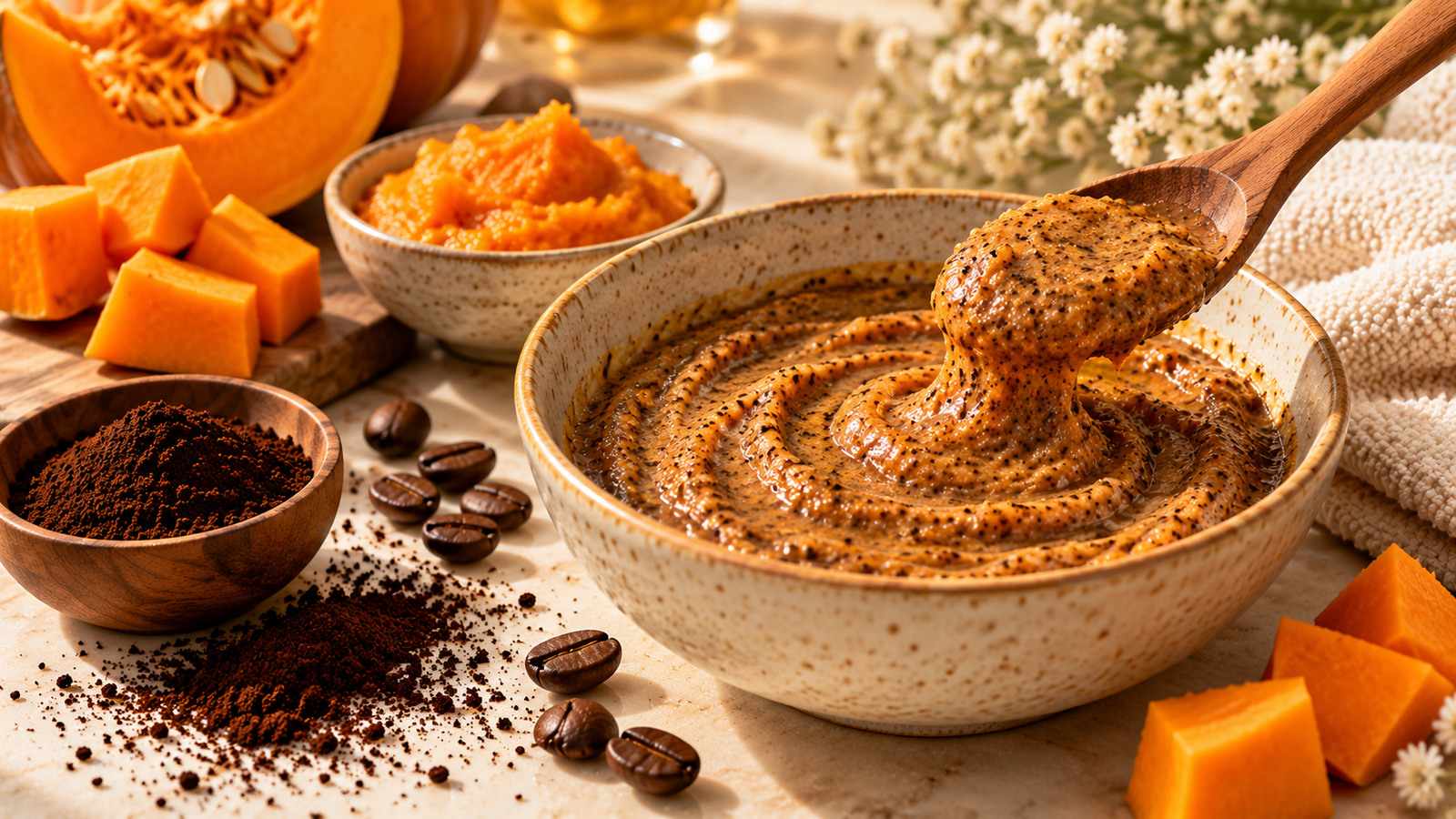
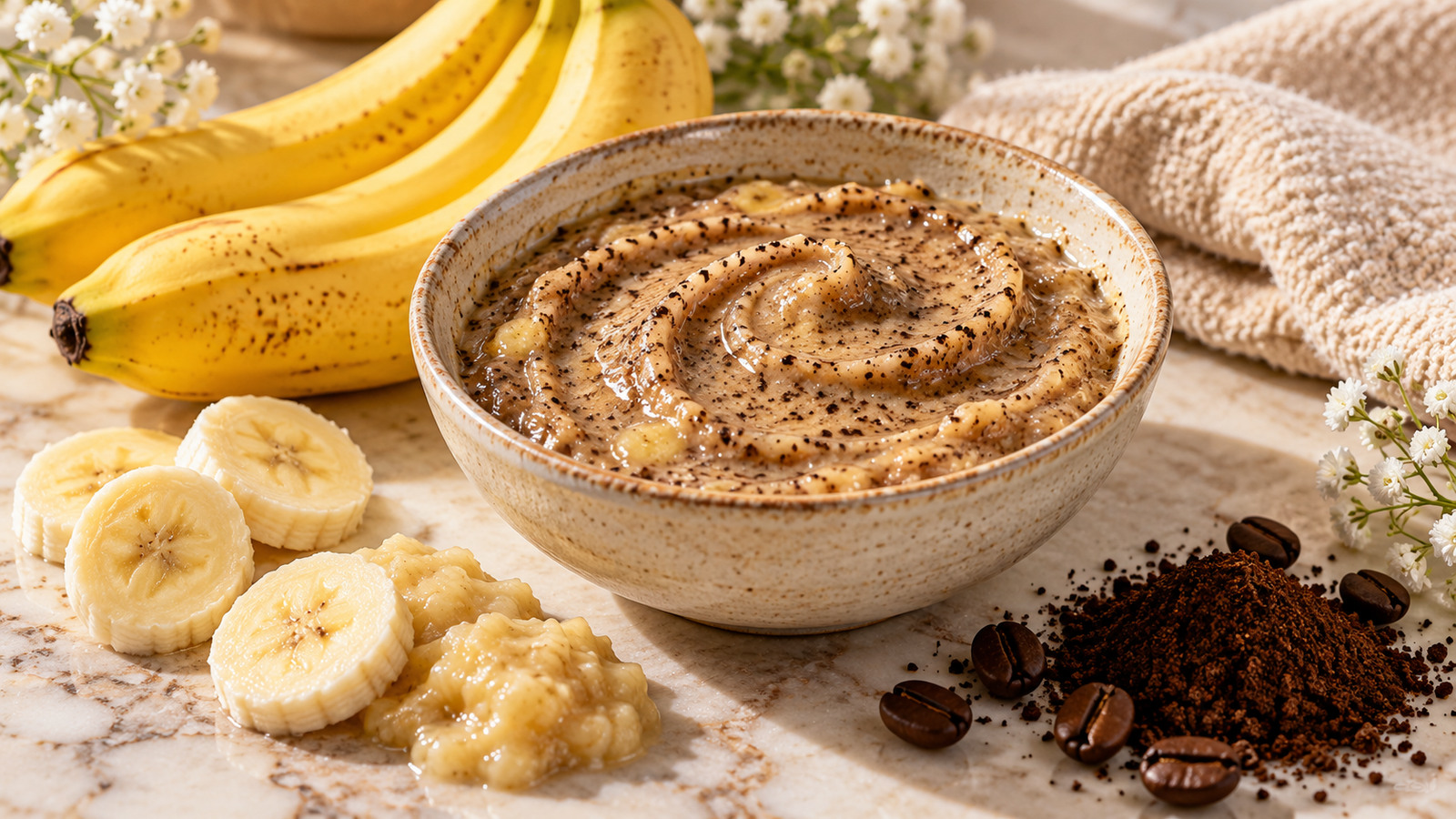
9. Coffee and Banana Face Mask — A Smooth Fruit Variation
Ingredients
- 1 batch cooled coffee base
- 1 teaspoon fully mashed ripe banana
- ½ teaspoon plain curd, if needed for a smoother texture
How to make it: Mash the banana thoroughly until there are no chunks. Stir in the coffee base, followed by a little curd only if the mixture is difficult to spread. Rinse thoroughly.
Why try this one? A ripe banana creates a soft, creamy base. Treat this as a DIY texture variation, not a proven way to tighten pores or treat blemishes.
Watch for: Banana bits that cling to the skin—do not scrub them off. Use plenty of water and gentle fingertips.
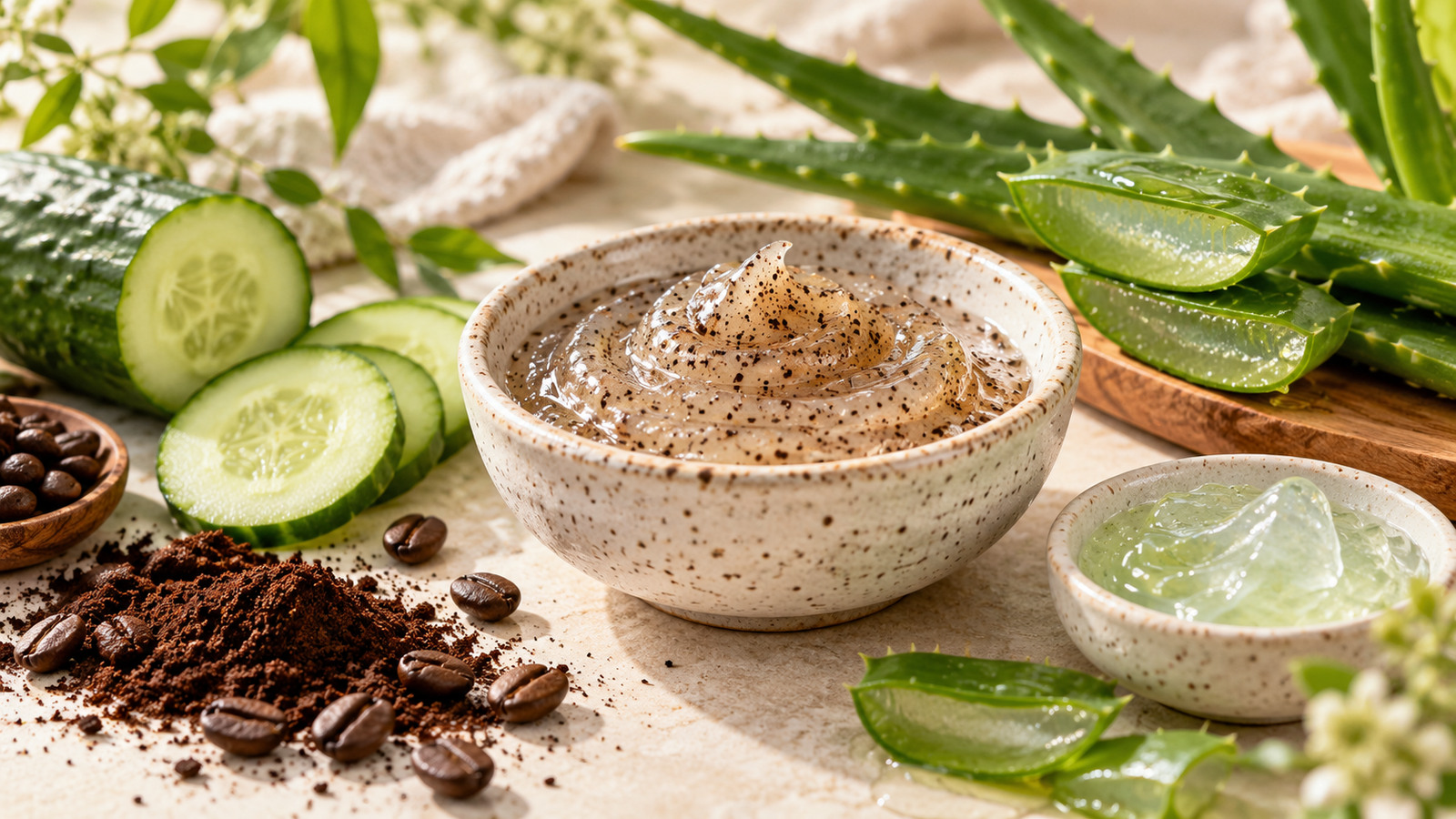
10. Coffee, Cucumber and Aloe Vera Face Pack — A Fresh Gel Texture
Ingredients
- 1 batch cooled coffee base
- ½ teaspoon peeled cucumber, finely blended and strained into a smooth pulp
- 1 teaspoon fragrance-free aloe vera gel
How to make it: Blend or finely grate peeled cucumber and remove large fibres. Mix the smooth pulp with aloe gel, then add the cooled coffee base. Apply a thin layer and rinse.
Why try this one? It has a light, fresh consistency that can feel pleasant on otherwise healthy skin, especially in warm weather. It does not replace proper treatment for sunburn or irritated skin.
Watch for: Food hygiene. Prepare the cucumber freshly, use clean utensils and discard all leftovers.
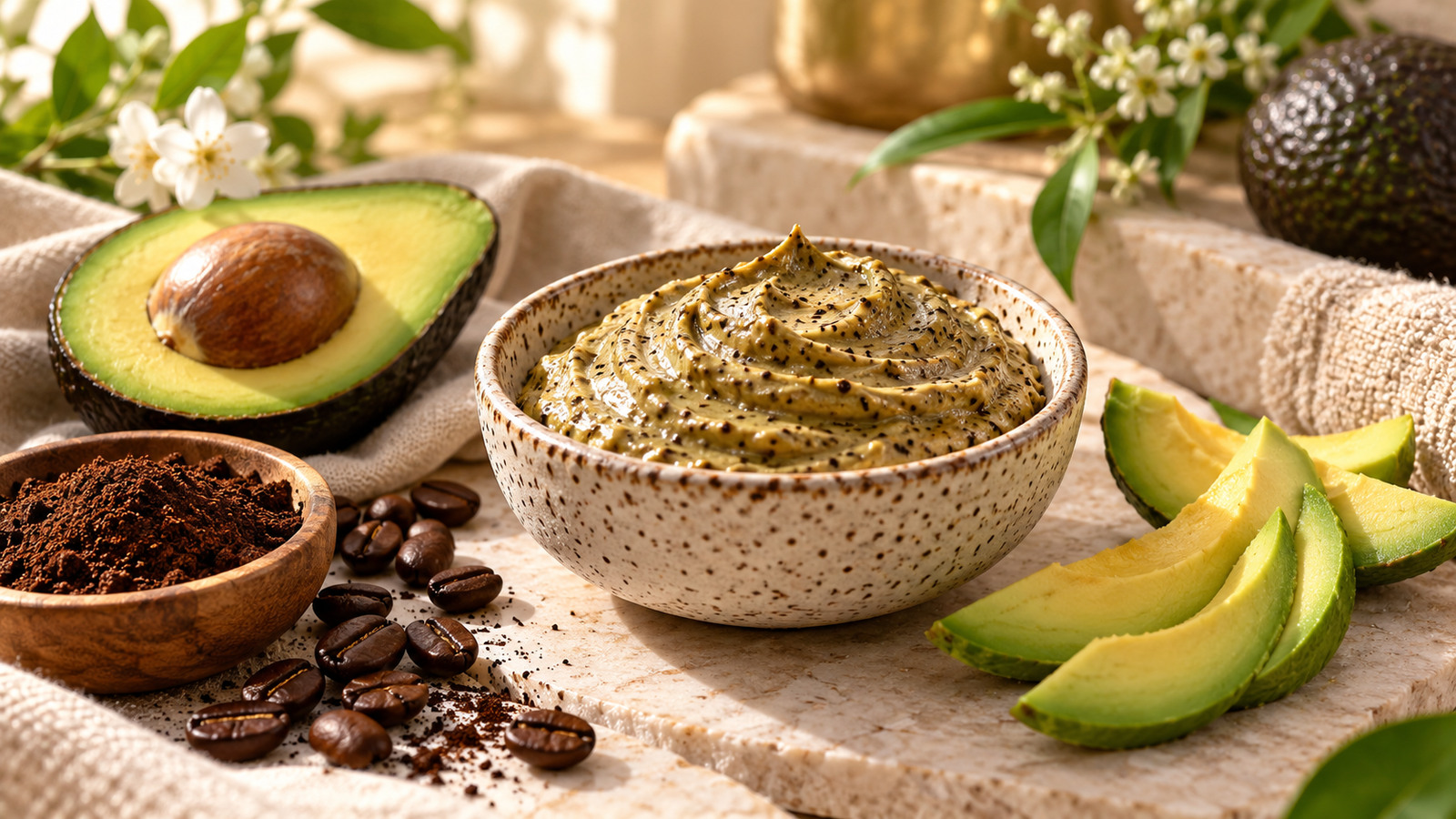
11. Coffee and Avocado Face Mask — A Richer-Feeling Mix
Ingredients
- 1 batch cooled coffee base
- 1 teaspoon ripe avocado, mashed until completely smooth
- Up to ½ teaspoon aloe gel, only if needed to improve spreadability
How to make it: Mash the avocado with the back of a spoon until silky. Fold in the coffee base; add aloe gel if the paste is too thick. Spread a thin layer and rinse gently.
Why try this one? Avocado gives a richer, buttery feel. A kitchen mixture is not interchangeable with a tested moisturising cream, and it may feel heavy on oily or blemish-prone skin.
Watch for: Avocado allergy, including reactions in some people with latex sensitivity.
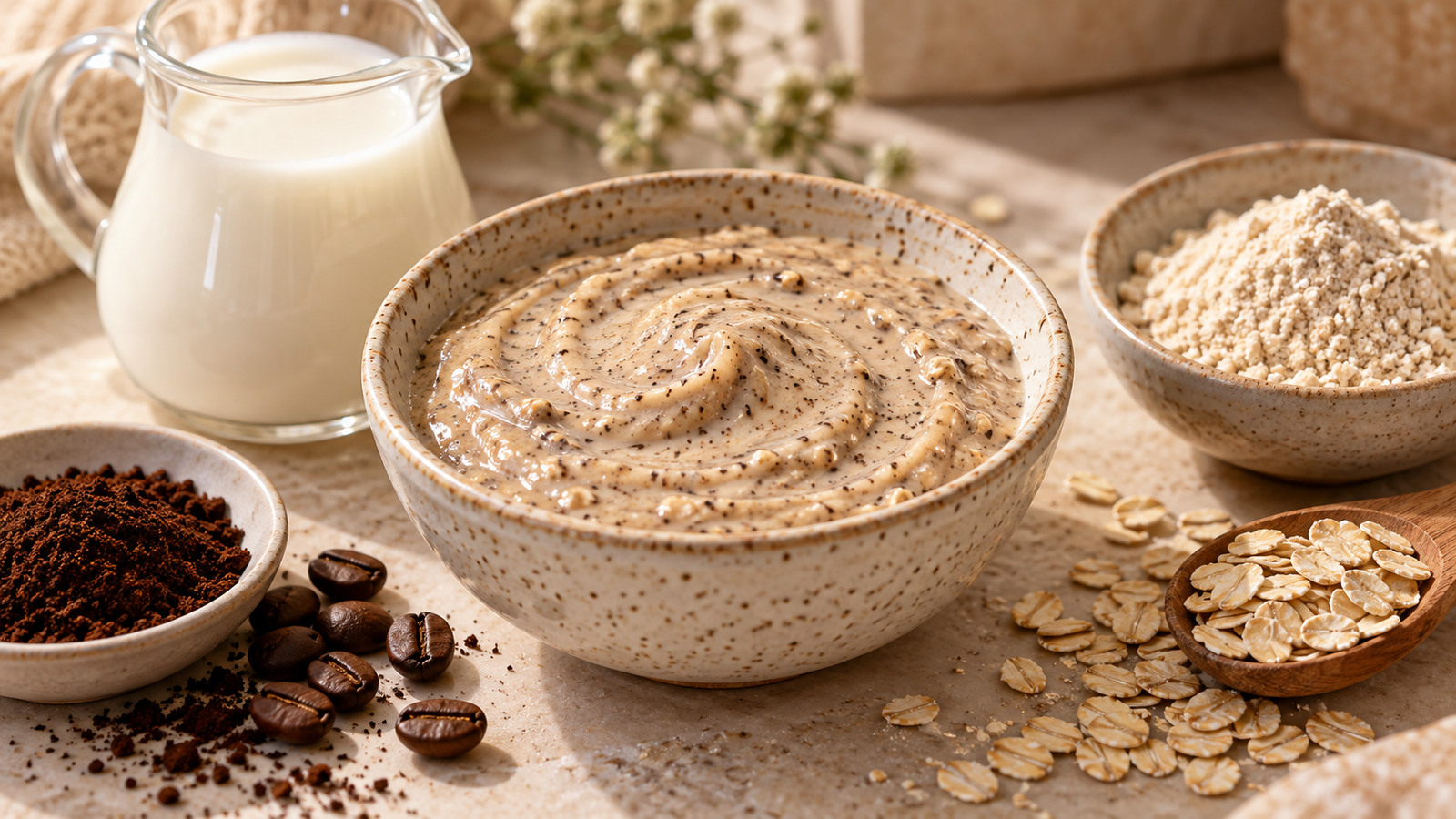
12. Coffee, Milk and Oat Face Pack — A Thin, Creamy Finish
Ingredients
- 1 batch cooled coffee base
- 1 teaspoon pasteurised plain milk
- 1 teaspoon finely milled plain oat flour
How to make it: Stir the milk into the coffee base, then add oat flour slowly until it forms a soft paste. Apply gently and rinse before it starts drying onto the skin.
Why try this one? It is an easy-to-mix option for anyone who prefers a less sticky texture than honey. Don’t expect milk to bleach skin or the oats to work as a medical treatment.
Watch for: Dairy allergy or sensitivity. Don’t use raw/unpasteurised milk, scented milk or a mixture that has been sitting out.
Which Coffee Face Pack Should You Choose for Your Skin Type?
No homemade coffee pack has been established as the best treatment for a particular skin type. But some textures are more comfortable than others. Here is a sensible way to narrow down the list.
| Skin type or concern | If you still want to try a mask | Better to avoid |
|---|---|---|
| Normal skin | Start with simple honey (#1), curd (#2) or aloe (#3), if already tolerated | Adding lots of new ingredients at once |
| Dry-feeling skin | A smooth honey (#1) or creamy oat (#4) mixture may feel less tight than clay | Multani mitti (#6) if it makes skin feel dry |
| Oily or combination skin | A lightweight aloe gel (#3) may feel more comfortable; clay (#6) needs extra caution | Long wear times, hard-drying masks and friction |
| Acne-prone skin | Prefer a proven acne routine; only consider DIY masks away from active inflammation | Scrubbing over pimples or expecting a DIY acne cure |
| Sensitive skin, eczema or rosacea | Skip these DIY coffee masks, especially during flares | Coffee grounds, fragrances, citrus and experimenting on irritated skin |
| Dark spots, melasma or post-acne marks | Focus on consistent sun protection and evidence-based care | Claims of instant tan removal or skin lightening |
If your skin is feeling dry or tight after any face pack, a suitable moisturiser matters more than adding another ingredient. See our WomenSutra guide to moisturiser vs lotion and which texture to choose.
What Are the Real Benefits of a Coffee Face Mask?
You will often see claims that coffee masks brighten skin instantly, tighten pores, remove tanning, erase dark spots and stimulate collagen. It helps to separate the research from the recipe.
Coffee contains caffeine and polyphenols, including chlorogenic acids. Scientists have studied coffee-derived extracts in laboratories, animal studies and a limited number of small human studies involving specific formulations. A 2026 scientific review found promising activity but also major gaps in clinical evidence. Those results cannot automatically be applied to coffee mixed with foods in a kitchen bowl. Read the review on PubMed.
| Claim you may hear | What the evidence supports |
|---|---|
| “Coffee gives glowing skin” | A mask may temporarily change how skin feels or looks, especially depending on the add-ins. No guaranteed glow. |
| “Coffee face pack removes tan” | Not a reliable or established method of treating tanning or pigmentation. |
| “Coffee and honey cure pimples” | No evidence that this homemade combination treats acne. |
| “Coffee reduces under-eye puffiness” | Some formulated caffeine products have been explored, but do not place homemade coffee masks near the eyes. |
| “Coffee boosts collagen and removes wrinkles” | Laboratory or formulation research cannot validate these claims for DIY mixes. |
| “Antioxidants in coffee replace sunscreen” | False. A coffee mask does not provide tested UV protection. |
For most people, a gentle cleanser, suitable moisturiser and daily sunscreen are more valuable than a rotating collection of face packs. The American Academy of Dermatology’s advice on facial masks explains that masks can complement a routine, but cannot replace acne or eczema treatment.
Instant Coffee or Coffee Grounds: Which Is Better for a Face Mask?
For these rinse-off masks, choose plain instant coffee dissolved completely in water. The reason is simple: smooth texture. Undissolved coffee grounds can turn a mask into a physical scrub, and rubbing gritty particles may irritate facial skin.
| Coffee option | Our recommendation |
|---|---|
| Plain instant coffee | Preferred for a smooth mix; choose unsweetened and unflavoured |
| Finely ground coffee beans | Not ideal for these masks if grains remain; do not rub them on the face |
| Used coffee grounds | Skip: often gritty, and damp leftovers are not suitable for storing and reusing |
| Cooled brewed black coffee | A little may be used as a liquid, but concentration and resulting texture are less predictable |
| Coffee mixes with sugar, creamers or flavourings | Avoid unnecessary additives on facial skin |
Coffee face mask vs coffee scrub: A mask is applied gently and rinsed off. A scrub relies on friction and textured particles. You do not need a coffee scrub to enjoy a short DIY skincare ritual.
How to Apply a Homemade Coffee Face Mask Without Overdoing It
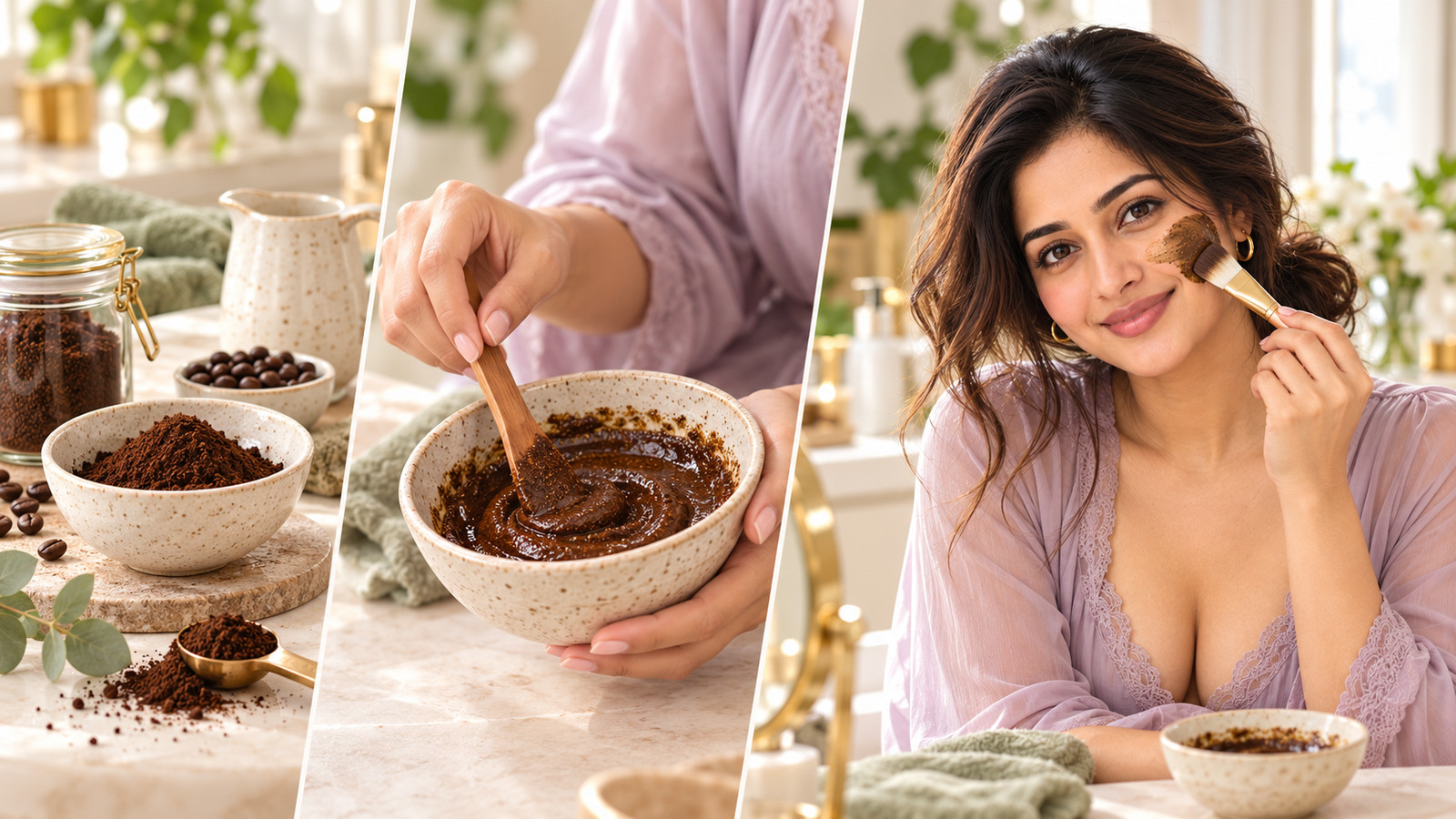
- Check your skin first. If it is inflamed, sunburned, broken, peeling or unusually reactive, skip the mask.
- Check the ingredients. Don’t apply foods, plants or cosmetics you are allergic to. A quick spot test cannot rule out delayed contact allergy.
- Mix just before use. Start with a clean bowl, clean hands and freshly prepared ingredients. Allow dissolved coffee to cool fully.
- Wash your face gently. No facial steaming or scrubbing is needed beforehand.
- Spread a thin layer. Avoid eyes, lips, nostrils, cuts and irritated patches.
- Keep the first use brief. About five minutes is a cautious starting suggestion, not a clinically validated ideal time. Rinse immediately if burning, itching or stinging begins.
- Rinse without rubbing. Use lukewarm water, pat dry and apply your regular moisturiser. Continue your usual sunscreen routine.
How Often Should You Use a Coffee Face Mask?
There is no research-established ideal schedule for these kitchen recipes. Do not use them daily. If you have healthy skin, tolerate the ingredients and still want to try one, keep it occasional—roughly once a week at most to start is a conservative practical suggestion, not a proven dose. Stop if you notice tightness, itching, dryness or breakouts.
If you use a prescription retinoid, benzoyl peroxide, exfoliating acids or other potentially irritating products, adding DIY masks may not be worthwhile. Ask your dermatologist if you are unsure.
Is a Quick Patch Test Enough?
No. Some contact allergies develop hours or days later. The American Academy of Dermatology explains a longer small-area testing method for commercial skincare products, but that guidance does not validate the safety of homemade coffee-food mixtures. If you are unsure how your skin reacts—or have a history of allergy—skip DIY experiments rather than relying on a 10-minute test. Never store a homemade mixture for repeated testing. AAD: How to test skincare products.
Ingredients and Mistakes to Avoid
A pleasant-smelling homemade mixture isn’t necessarily skin-friendly. These are the shortcuts most worth avoiding:
- Lemon or lime juice: Citrus ingredients can irritate skin; some plant compounds in citrus can also cause a burn-like reaction when followed by sun exposure. Learn about phytophotodermatitis.
- Essential oils or strong fragrances: They can trigger irritation or allergy, especially on facial skin.
- Coarse coffee grounds, rice grains or rough scrubbing: Friction can make irritation and post-acne dark marks worse.
- Raw egg and raw milk: These are unnecessary additions with avoidable hygiene concerns.
- Turmeric for a promised instant glow: It can stain and may irritate some people; it is not necessary in these recipes.
- Using masks on eczema, rosacea, active acne lesions or sunburn: Do not use a home recipe to treat an existing skin condition.
- Keeping leftovers in the fridge: Homemade mixtures do not have a tested preservative system. Make a tiny batch and throw the rest away.
- Expecting a face pack to remove pigmentation: If a mixture irritates your skin, it may even contribute to darker marks after inflammation.
A Note on Dark Spots in Indian and Brown Skin
For medium-to-deep skin tones, irritation sometimes leaves pigmentation behind long after redness fades. That makes gentle skincare particularly important when your goal is to fade acne marks or uneven tone. The American Academy of Dermatology recommends treating the underlying cause and protecting skin from sunlight. A tinted broad-spectrum SPF 30+ sunscreen with iron oxides can be useful when visible light contributes to pigmentation. A dermatologist can recommend evidence-based treatments suited to the cause.
Frequently Asked Questions About Coffee Face Masks
Can I apply coffee to my face every day?
Daily use isn’t recommended. Homemade combinations are not standardised, and repeated application can irritate the skin. You do not need a face pack every day to have a good skincare routine.
Is coffee and honey good for glowing skin?
It is a popular, easy-to-mix combination that may leave skin feeling soft after rinsing. But a lasting or guaranteed glow from a homemade coffee-and-honey mask has not been established in clinical trials.
Can a coffee face mask remove tan and dark spots?
No reliable evidence shows that kitchen coffee masks remove tanning, melasma or post-acne dark marks. Sunscreen and suitable skincare or dermatology treatments are more dependable options.
Which coffee face pack is best for oily skin?
There is no proven best DIY coffee pack. If you tolerate the ingredients, the lightweight aloe version may feel more comfortable than heavy mixtures. Clay can feel drying, so use it cautiously, and don’t rely on masks to treat acne.
Can I use coffee and curd on my face?
You can make a smooth coffee-and-curd mixture if you tolerate dairy and the other ingredients. Use fresh plain curd, keep application brief and rinse gently. It is not a proven pigmentation treatment.
Can I use filter coffee powder instead of instant coffee?
Ground filter coffee usually remains gritty. This guide uses fully dissolved instant coffee to avoid unnecessary facial rubbing. Do not massage coffee grounds over your skin.
How long should a coffee mask stay on my face?
There is no validated wear time for these DIY recipes. For a first use, a brief period of about five minutes is a cautious editorial suggestion; wash off immediately if anything feels uncomfortable. Never leave a kitchen mask on overnight.
Can coffee and lemon make skin fairer?
No. Lemon juice can irritate the skin and creates avoidable risks, including certain reactions when citrus residues are followed by sunlight. Do not add lemon to these face packs.
Does coffee help with pimples or acne scars?
A home coffee mask isn’t an established treatment for active acne or acne scars. Scrubbing inflamed areas may worsen irritation. Consider an evidence-based acne routine or talk with a dermatologist.
Can I save leftover coffee face pack for tomorrow?
It’s better not to. Kitchen mixtures made with foods, gels and powders lack tested preservation. Prepare a small amount and discard what remains.
Final Thoughts: Keep It Simple
A coffee face mask at home can be an enjoyable five-minute DIY activity—especially when you prefer straightforward ingredients and a smooth texture. Among these 12 variations, coffee with honey, curd or aloe is an easy place to start if your skin already tolerates those ingredients. The other recipes offer different textures, not stronger medical benefits.
Enjoy the ritual if it works for you, but skip it if your skin is irritated, and don’t expect it to replace acne treatment, pigmentation care or sunscreen. The best routine is the one your skin tolerates consistently.
Explore more: Browse WomenSutra’s skincare guides for everyday skincare reading. If you are choosing a moisturiser after rinsing off a mask, follow the guide already linked in the skin-type section above.
Sources and Further Reading
- Liao H-F, et al. (2026). Exploring the Dermatological Benefits of Coffee Extracts and Their Derivatives. Antioxidants. Research review on PubMed. A review of coffee-derived ingredients and formulations; not a clinical trial of the 12 recipes in this article.
- American Academy of Dermatology Association. Do facial masks work, and should I add one to my skin care routine?. Guidance about mask selection, sensitivity and skincare routines.
- American Academy of Dermatology Association. How to test skin care products. Describes delayed reactions and testing formulated skincare products.
- American Academy of Dermatology Association. How to fade dark spots in darker skin tones. Pigmentation and sun protection.
- Cleveland Clinic. Phytophotodermatitis. Plant and citrus-related sun reactions.
- American Academy of Dermatology Association. How to apply sunscreen. Everyday sun protection.
This article is educational and is not personalised medical advice. The recipes are editorial DIY examples, not tested formulations or dermatologist-approved treatments. Consult a dermatologist for ongoing acne, rosacea, eczema, melasma or unusual skin reactions.
Comments