


Quick answer: A lotion is a type of moisturizer, not an alternative to moisturizer. Moisturizer is the umbrella term for products that help skin retain water and feel comfortable. A lotion is usually light and fluid; creams and ointments tend to be richer. The right choice depends on your skin’s dryness, the area you’re treating, and how the formula feels—not just the label.
If you’ve ever stood in a skincare aisle deciding between a body lotion, a face moisturizer and a cream, you’re not alone. The bottles can look as if they do completely different jobs, even though all three are designed to moisturize.
This guide explains the moisturizer and lotion difference, then gives you a practical way to choose a texture for your face or body, your budget and Indian weather.
Remember these three things:
- A lotion can absolutely be your everyday moisturizer.
- For significantly dry or cracked skin, a cream or ointment may help more than a light lotion.
- The ingredients and your skin’s response matter more than whether a product is called “lotion” or “cream.”
Moisturizer vs Lotion: Quick Comparison
| Feature | Lotion | Cream | Ointment |
|---|---|---|---|
| Typical texture | Fluid, easy to spread | Thick, creamy | Dense, often greasy |
| Usual feeling | Light | Richer | Most protective |
| Often suits | Normal or mildly dry skin, larger body areas | Dry skin, especially in cooler or drier conditions | Very dry, rough or cracked areas |
| Humid conditions | Often comfortable | Depends on the formula and skin | Can feel heavy |
| Face or body? | Either, if formulated appropriately | Either, if formulated appropriately | Usually targeted areas; follow product advice |
Important: These are general tendencies. A well-formulated lotion may moisturize better than a poorly suited cream. The ingredient list and your individual skin response still matter.
What Is a Moisturizer? And What Is a Lotion?
A moisturizer helps maintain water in the outer skin layer and supports the skin’s protective barrier. Many formulas combine ingredients that attract water, smooth rough skin and slow moisture loss.
A lotion is one form of moisturizer. It is generally more fluid than a cream, making it easy to spread across the arms, legs and other larger areas. There are also facial lotions designed specifically for the face.
Think of it this way: moisturizer is the whole family; lotion is one member of that family.
When people ask whether lotion or moisturizer is better, the more useful question is: Do I need a gel, lotion, cream or ointment?
Gel vs Lotion vs Cream vs Ointment
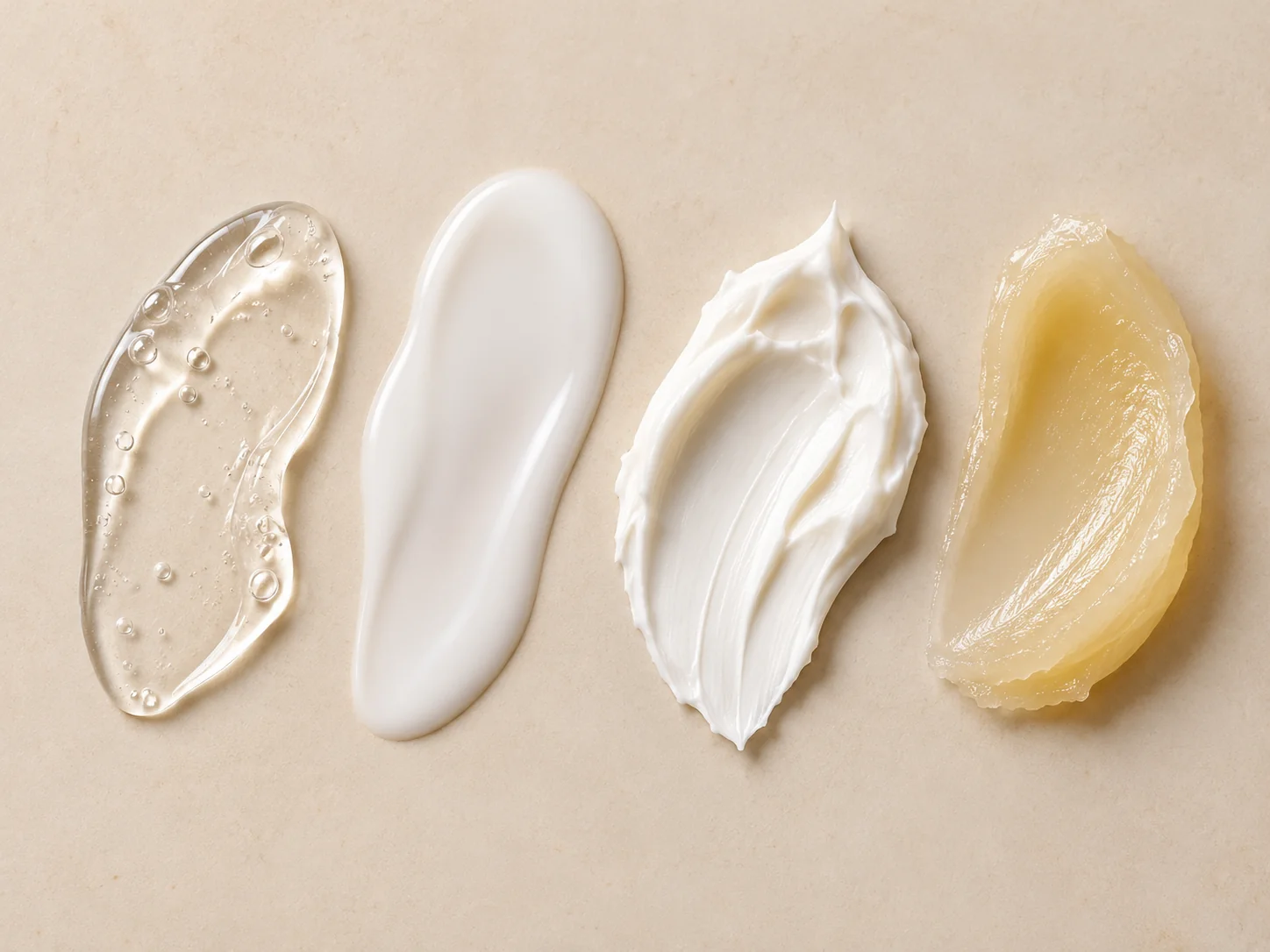
Gel: Usually has a light, often water-based feel. It can be pleasant for oily skin or in humid weather, though some gels are not rich enough for dry patches.
Lotion: Spreads easily and often feels less greasy. It can work well for everyday moisturizing when dryness is mild.
Cream: Typically thicker and more protective than a lotion. A good first option when skin feels flaky, rough or persistently tight.
Ointment: Usually the richest option, often containing ingredients such as petrolatum that help reduce water loss. Useful for extremely dry areas, but it may feel greasy.
The American Academy of Dermatology notes that creams and ointments are often more effective choices for very dry skin. Texture alone isn’t a guarantee, but it is a useful starting point.
Which One Is Right for Your Skin Type?
| Your skin | Sensible starting point | What to look for |
|---|---|---|
| Oily or acne-prone | Gel or lightweight lotion | Comfortable finish; non-comedogenic products if you’re breakout-prone; glycerin or hyaluronic acid |
| Dry | Cream, or a richer lotion for milder dryness | Glycerin, ceramides, dimethicone or petrolatum, depending on severity |
| Combination | Light lotion or gel-cream; richer formula on dry patches | A texture that doesn’t overwhelm the T-zone but comforts cheeks |
| Sensitive | Simple fragrance-free lotion or cream | Few unnecessary additives; ingredients you’ve previously tolerated |
| Normal | Any comfortable lotion or cream | A formula you can use consistently |
Does oily skin really need moisturizer?
It can. Oiliness and dryness are not opposites: acne treatments such as benzoyl peroxide or retinoids may make even oily skin dry or irritated. Choose a moisturizer when your skin feels dry and opt for a product described as oil-free or non-comedogenic if breakouts are a concern. The AAD’s acne guidance explains why moisturizers can be helpful alongside acne treatment.
What about sensitive skin?
Prioritize fragrance-free, not merely “unscented,” and be careful when introducing many new active ingredients at once. A product being “natural” does not mean it cannot irritate skin. If you have eczema, rosacea or recurring reactions, individualized advice is especially useful.
Can You Use Body Lotion on Your Face?
Sometimes, yes. The words body lotion do not automatically mean a formula is unsafe for facial skin. Some basic moisturizers are intended for both face and body.
Check whether the manufacturer permits facial use, and think about your skin’s needs. A highly fragranced body lotion might not be a good match for sensitive facial skin; an acne-prone person may prefer a lightweight non-comedogenic facial formula. If the same gentle, suitable lotion works for both areas, you do not need two separate bottles simply because the labels differ.
For the body, a lightweight lotion can be a convenient everyday choice after showering. If elbows, hands or heels remain rough, apply a richer cream or ointment where needed.
Which Moisturizer Works Better in Indian Weather?
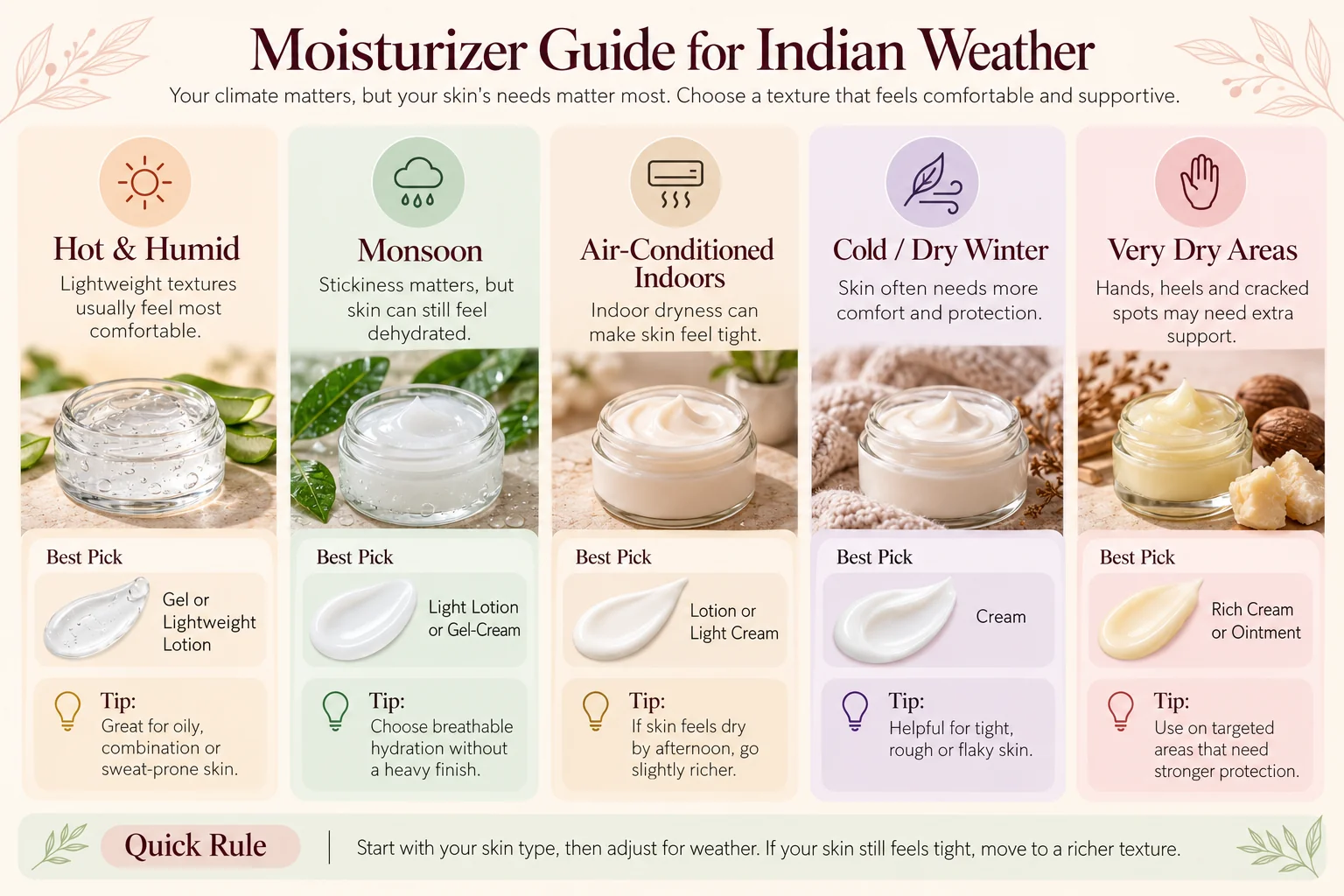
Indian weather varies widely—from humid coastal summers to dry northern winters. Choose for your skin first, then adjust for the conditions.
| Conditions | Starting point | When to change |
|---|---|---|
| Hot, humid days | Gel or lightweight lotion | If you still feel tightness, try a more nourishing formula |
| Monsoon humidity | Light lotion or gel-cream | If your skin is dry despite the humidity, choose a cream |
| Long hours in AC | Lotion or cream | If afternoon tightness develops, try something richer |
| Cold, dry winter | Cream | Add ointment to stubbornly dry areas if appropriate |
| Very rough hands or heels | Rich cream or ointment | Seek advice for painful or persistent cracks |
For example, a moisturizer that feels comfortable in a Delhi winter may feel sticky during a humid Mumbai afternoon. But there’s no need to switch products every season unless your skin is telling you it needs something different.
Which Ingredients Should You Look For?
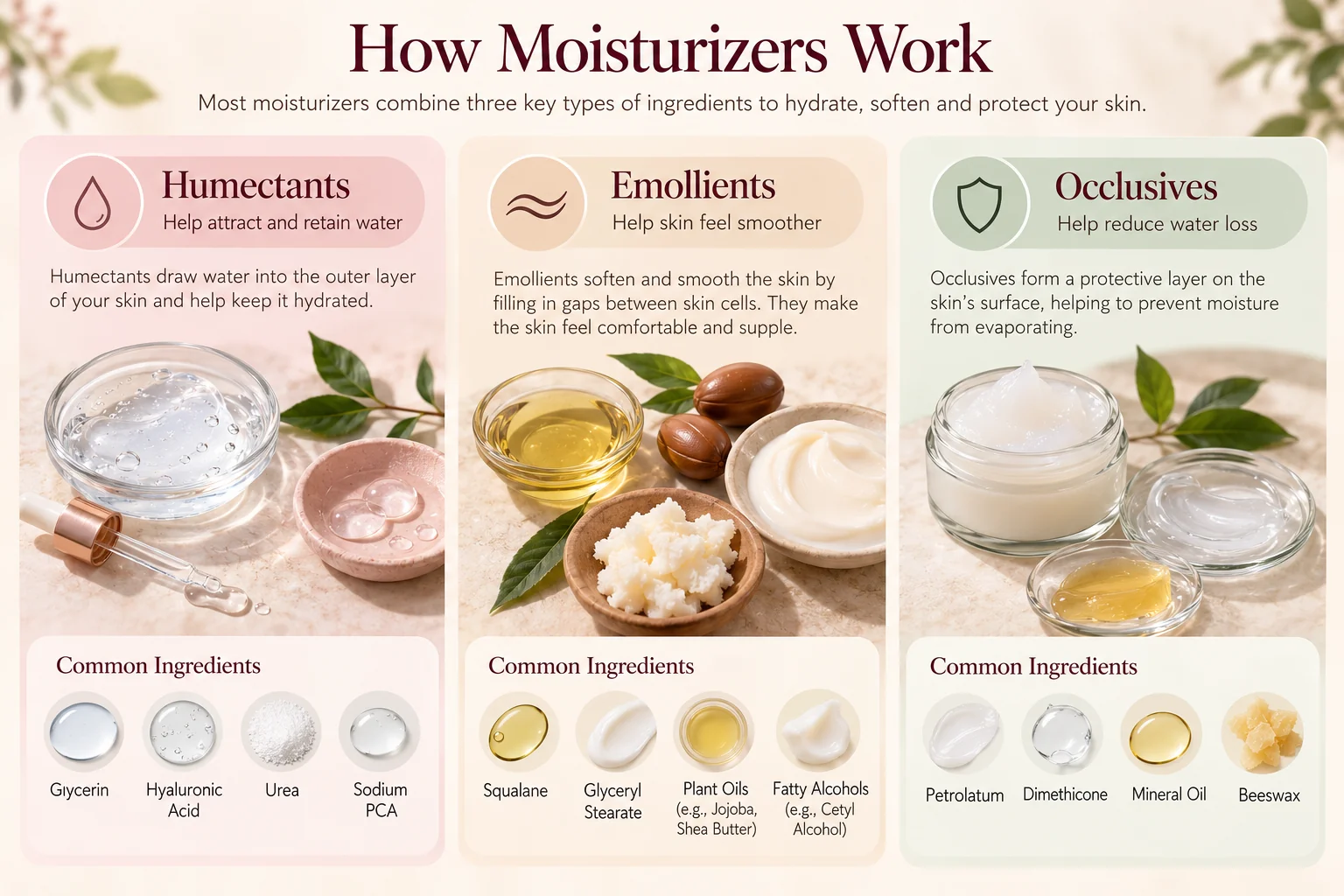
Most effective moisturizers combine more than one category of ingredient.
| Ingredient group | What it does | Examples |
|---|---|---|
| Humectants | Attract and help retain water in the outer skin layer | Glycerin, hyaluronic acid, urea |
| Emollients | Smooth and soften rough skin | Squalane, glyceryl stearate, selected plant oils |
| Occlusives | Help slow water evaporation from the skin | Petrolatum, dimethicone, mineral oil |
Ceramides are skin-barrier lipids often included in moisturizing formulas. They are not a magic ingredient on their own; the overall formulation matters.
For sensitive or irritated skin, fragrance-free options are a good starting point. Also, not every ingredient called an alcohol is drying: fatty alcohols such as cetyl alcohol and stearyl alcohol are commonly used to improve cream texture and skin feel.
If you have very dry or cracked skin, be cautious with strong exfoliating ingredients and higher-strength urea or acid formulas, which may sting. DermNet’s overview explains these ingredient groups and their uses.
The WomenSutra Five-Point Moisturizer Selection Checklist
You don’t need a complicated 10-step routine or an expensive product to make a sensible choice. Before buying, work through these five questions:
- How dry is your skin today? Mild tightness may suit a lotion. Visible flaking or persistent dryness points toward a cream. Severe roughness may need an ointment or medical assessment.
- Where will you apply it? Check that the product is appropriate for your face, body or a specific dry patch.
- What will you be doing afterward? A lightweight finish may feel better before work or in humid conditions; a richer product may suit dry evenings or rough hands.
- Which ingredients can you comfortably tolerate? Look for useful moisturizing ingredients and avoid known triggers. Sensitive skin often benefits from a simpler, fragrance-free formula.
- Will you use it consistently at its price? Compare cost per 100 mL or gram, not just the shelf price. A basic, affordable product that suits your skin is often a better purchase than an expensive jar you rarely use.
A practical decision rule: Begin with the least-heavy suitable texture that keeps your skin comfortable. If dryness persists, move to a richer formula rather than collecting more and more products.
Can you compare two moisturizers at home?
Yes—compare personal comfort, not unmeasurable performance claims. Check the labels and suitability first, then note how each formula spreads, whether it feels greasy, and whether your skin still feels comfortable later. Don’t assume that the one that absorbs fastest hydrates the most.
If you’re concerned about reactions, follow the AAD’s guidance on testing new skincare products on a small area before widespread application.
Editorial transparency: This is a consumer decision framework based on dermatology guidance. WomenSutra is not claiming to have clinically tested specific moisturizers or measured their hydration performance. Golden Anaya, WomenSutra’s virtual beauty host, is an illustration and presenter, not a customer testimonial or dermatologist.
How and When Should You Apply Moisturizer?
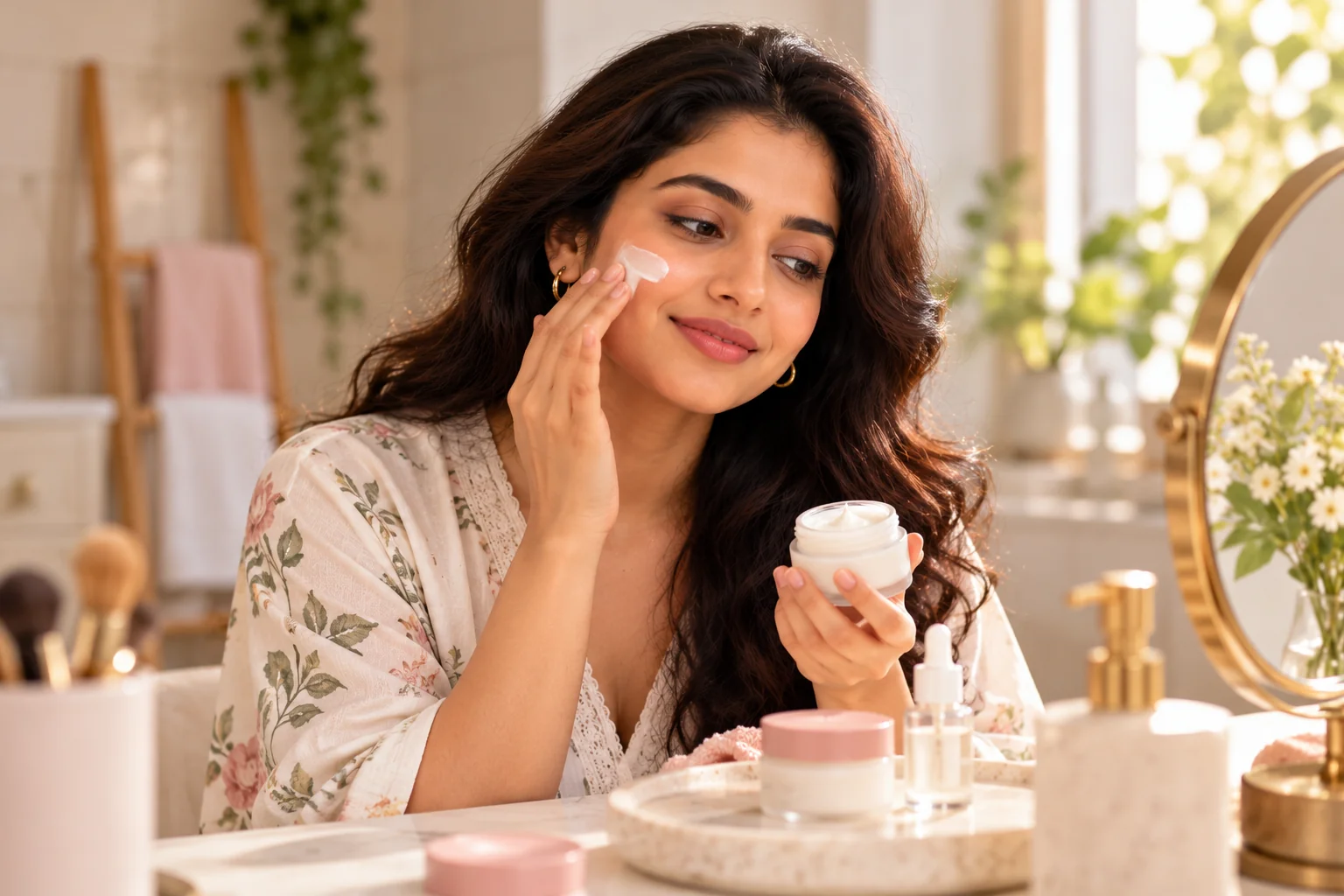
The best time to moisturize is often just after washing, while your skin is still slightly damp.
For your face, use a gentle cleanser, apply any prescribed or routine treatment as directed, then moisturize when compatible with that treatment. In the daytime, also use broad-spectrum SPF 30+ sunscreen; a regular moisturizer is not a substitute for sunscreen.
For your body, take a comfortably warm shower, pat your skin gently, and apply your lotion or cream promptly. Pay extra attention to hands after washing and to areas that regularly become dry. The AAD recommends moisturizing immediately after bathing.
You don’t need to layer lotion and cream every day. One well-chosen moisturizer may be plenty.
Five Common Moisturizer Mistakes
- Treating lotion and moisturizer as opposites. Lotion is already a moisturizer.
- Assuming thicker is always better. A formula that feels uncomfortable may discourage consistent use.
- Assuming natural means irritation-free. Essential oils and fragrance can still provoke reactions.
- Avoiding all “alcohol” ingredients. Fatty alcohols are different from drying alcohols; look at the overall formulation.
- Using moisturizer instead of sun protection. Choose a separate appropriate sunscreen unless your moisturizing product itself provides and is labeled for adequate broad-spectrum SPF protection.
When Should You See a Dermatologist?
Basic dryness often improves with gentler washing and regular moisturizing. Seek professional advice if you have persistent itching, an ongoing rash, repeated product reactions, or dryness that does not improve. Cracked, bleeding, painful or inflamed skin may need more than an over-the-counter cosmetic product. Get prompt care for signs of infection, such as spreading redness, warmth, pus or fever.
Moisturizer vs Lotion: FAQs
Is lotion the same as moisturizer?
Lotion is a type of moisturizer. Moisturizer is the broader category that includes gels, lotions, creams and ointments.
Is lotion enough for dry skin?
Often for mild dryness. If your skin stays flaky, tight or rough, a cream or ointment may be a better choice.
Can I use body lotion as face moisturizer?
Sometimes. Check that the formulation is appropriate for facial use and doesn’t cause irritation or breakouts.
Is gel better than lotion for oily skin?
A gel often feels lighter, but neither is universally better. Choose a comfortable formula that meets your skin’s needs; acne-prone skin may benefit from a non-comedogenic product.
Should I moisturize in humid weather?
If your skin feels dry or needs moisture, yes. Many people prefer a lighter lotion or gel in humidity, but dry skin may still need a cream.
Does a more expensive moisturizer work better?
Not necessarily. Ingredients, suitability, tolerability and consistent use matter more than price alone.
The Bottom Line
Lotion is a moisturizer. You don’t have to choose between the two; you need to choose a texture and formula that suits your skin. Reach for a lighter lotion when it’s comfortable and enough. Choose a cream or ointment when skin needs stronger protection, and adjust for your environment without overcomplicating your routine.
If dryness is your main concern, continue with WomenSutra’s guide to selecting a moisturizer for dry skin.
References & Editorial Method
This article summarizes guidance from established dermatology organizations. It does not claim hands-on testing, medical diagnosis or professional review that has not taken place.
- American Academy of Dermatology: How to pick the right moisturizer
- American Academy of Dermatology: Tips for relieving dry skin
- American Academy of Dermatology: Moisturizer and acne
- DermNet: Emollients and moisturisers
- American Academy of Dermatology: Test skincare products
Educational information only; not a substitute for diagnosis or advice from a qualified healthcare professional.
Comments