

Does your face feel tight after washing it in winter? Maybe your cheeks are dry but your forehead is still oily. Or that light moisturizer you loved in summer suddenly isn’t doing much.
The good news? You don’t need a whole new skincare shelf for winter. A gentle cleanser, a moisturizer that feels right for your skin, and sunscreen are a great place to start.
Here’s an easy winter skincare routine for Indian weather, with a few tweaks for different skin types.
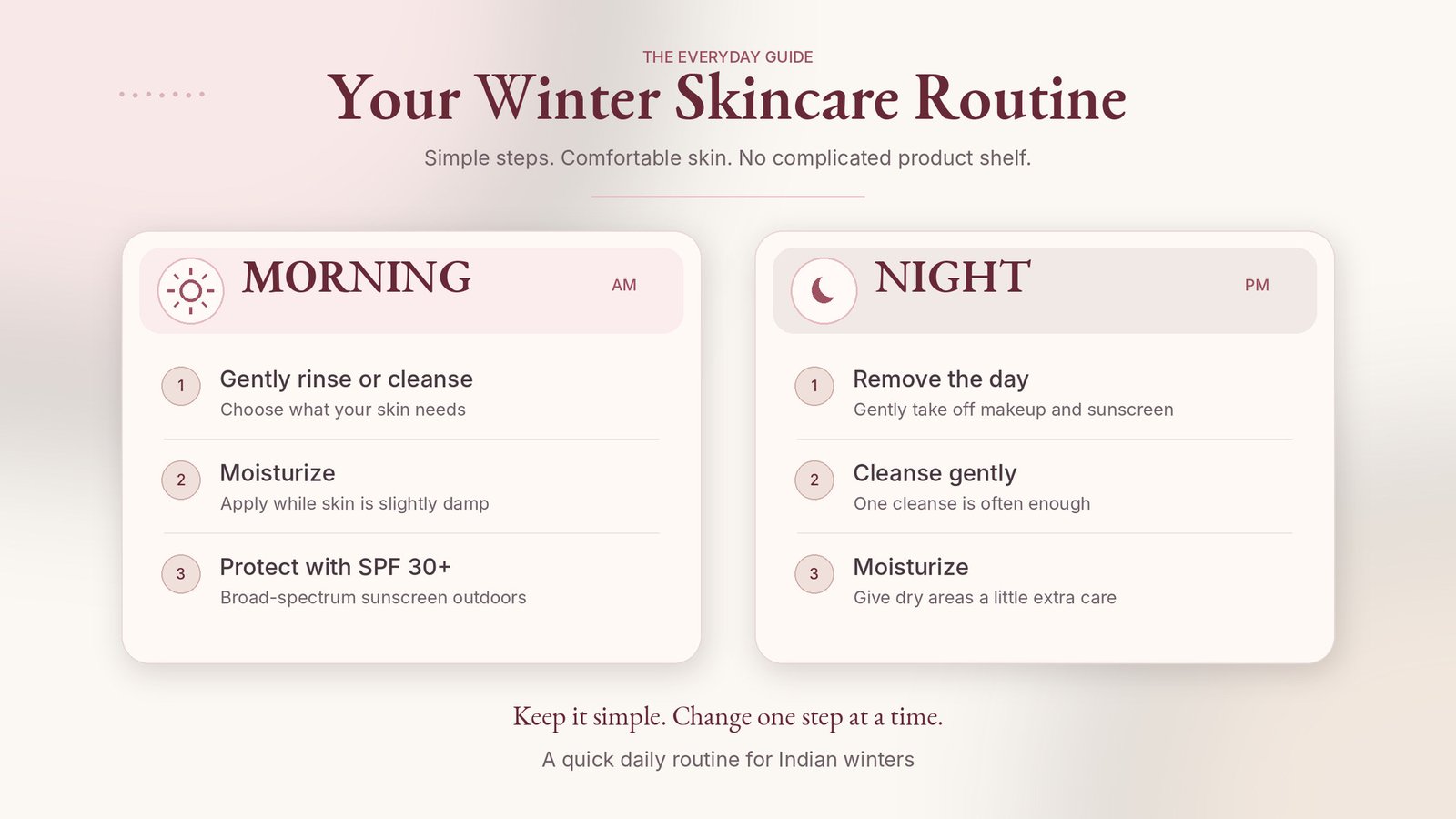
Your simple winter routine
Morning: Gentle rinse or cleanse → moisturizer → broad-spectrum SPF 30+ sunscreen for daytime sun protection.
Night: Gently remove makeup/sunscreen and cleanse → moisturizer.
Optional: A hydrating serum or your usual treatment, if your skin needs it and tolerates it.

Anaya is WomenSutra’s virtual beauty host. This is an AI-generated editorial image.
Why Does Skin Feel Drier in Winter?
Cold winds, lower humidity and indoor heating can make it harder for skin to hold on to moisture. Add long, hot showers or a harsh face wash, and your skin may feel tight, rough or flaky.
It doesn’t only happen to dry skin. Oily skin can feel dehydrated too, especially around the cheeks. A shiny forehead doesn’t mean your whole face needs more cleansing.
The American Academy of Dermatology (AAD) recommends gentle products, lukewarm water and moisturizing soon after washing to help ease dryness.
Morning Winter Skincare Routine: 4 Easy Steps
You can do this in a few minutes before getting on with your day.
1. Wash gently (or just rinse)
Use a mild cleanser with lukewarm water if your face feels oily or needs cleaning. If your skin is very dry in the morning, a water rinse may be enough for you.
Skip the squeaky-clean feeling. It’s not a sign that your cleanser is doing a better job.
2. Use a hydrating serum only if you want one
A simple serum with glycerin or hyaluronic acid can add a little extra hydration. But it’s completely optional—many moisturizers already contain hydrating ingredients.
3. Apply moisturizer
Try putting it on while your skin is still slightly damp. A cream may feel nicer than your summer gel if your face is getting dry or flaky.
If you have an oily T-zone and dry cheeks, you don’t have to use the same amount everywhere. A little extra on the cheeks is fine.
Not sure whether to choose a lotion or cream? See our moisturizer vs lotion guide.
4. Don’t skip sunscreen
Winter sun is still sun. When you’re outside during the day, choose a broad-spectrum, water-resistant SPF 30 or higher and pair it with shade or protective clothing where practical. Follow the product directions; reapply about every two hours while outdoors, and after swimming or sweating.
If sunscreen feels drying, try a more moisturizing formula or use it after your moisturizer. The AAD also recommends winter sun protection.

Night Skincare Routine: Keep It Simple
Your evening routine is mostly about washing away the day without leaving your skin feeling stripped.
1. Remove the day’s products gently
A gentle cleanser may be all you need to remove your usual sunscreen and makeup. If you’ve worn long-lasting makeup or water-resistant products, a separate remover might help.
You don’t need to double-cleanse every night. Use one cleanse if it works for you, and avoid rubbing or repeatedly washing until your skin feels tight. Rinse with lukewarm water.
2. Be careful with strong treatments
If you use an exfoliating acid or over-the-counter retinol and your skin starts stinging, peeling or getting irritated, don’t pile on more active products. Keep your routine gentle and get advice if irritation continues.
If you use a prescription retinoid or acne treatment, speak to your prescriber before changing how you use it.
3. Finish with moisturizer
Apply moisturizer after cleansing. If your cheeks are especially dry, use a little extra there. The aim is comfortable skin, not a thick, greasy layer over your whole face.

What If Your Winter Routine Isn’t Working?
Before buying another serum, check how your skin feels and make one small change at a time.
| What you’re noticing | Try this first |
|---|---|
| Dry cheeks, shiny forehead | Use a lighter moisturizer on your T-zone and a richer one on your cheeks. |
| Tight skin after face wash | Switch to a gentler cleanser or wash less often if appropriate. |
| Dryness after a hot shower | Turn down the water temperature and moisturize soon afterward. |
| Your summer gel isn’t enough in Delhi’s winter | Add a simple cream to dry areas rather than replacing every product. |
| A product keeps stinging | Stop the new product and seek advice if irritation persists. For a prescribed treatment, contact the prescriber. |
Indian winters aren’t all alike. Delhi or Chandigarh may feel colder and drier than Mumbai or Chennai, but your room temperature, travel habits and individual skin matter too. Go by how your skin responds, not just the weather forecast.
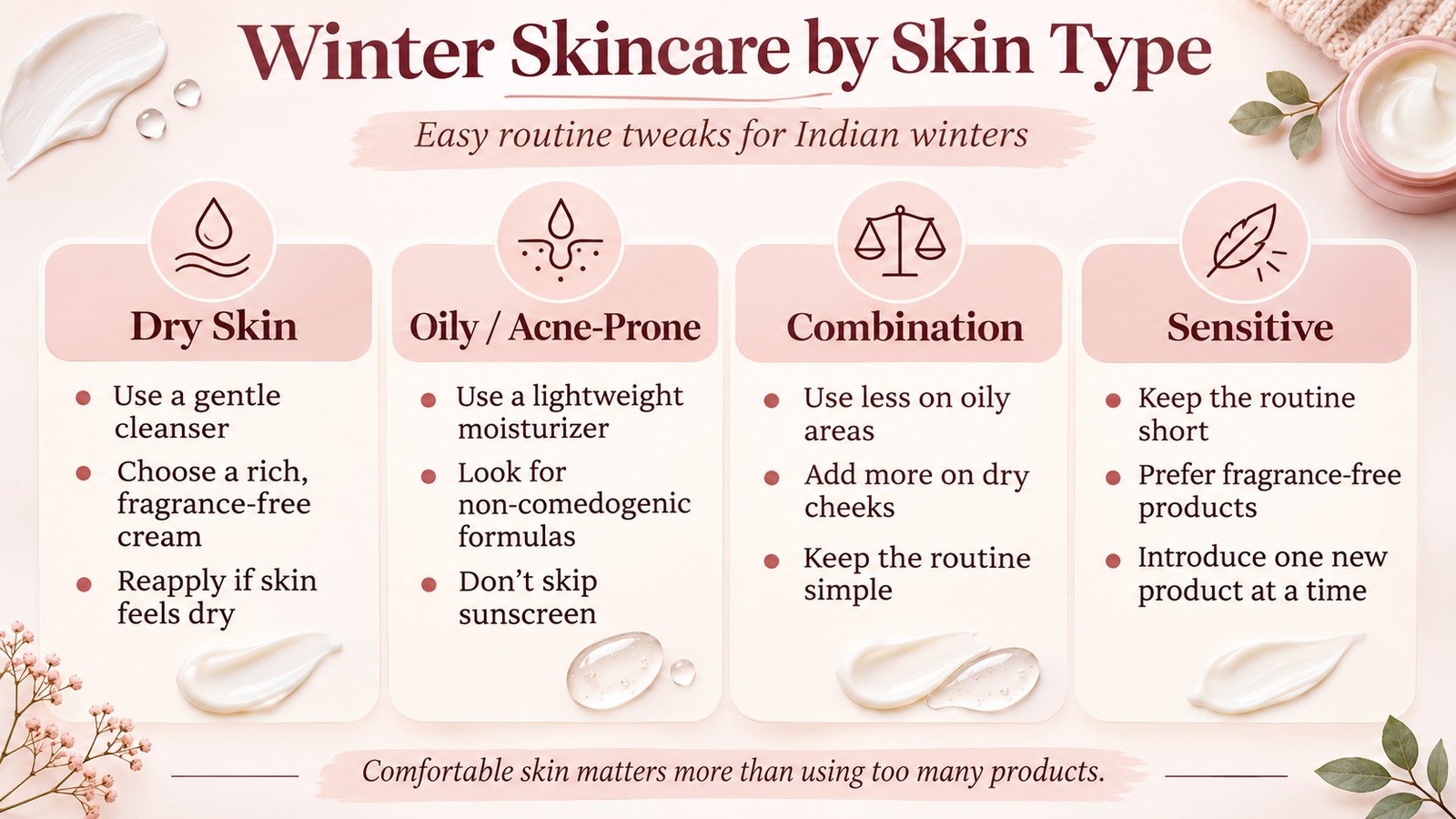
Winter Skincare for Different Skin Types
| Your skin type | Keep it easy |
|---|---|
| Dry skin | Choose a gentle cleanser and a comfortable, fragrance-free cream. Apply again when skin feels dry. |
| Oily or acne-prone skin | Use a lightweight moisturizer that suits your skin; look for non-comedogenic options if you break out easily. |
| Combination skin | Use less product on oily areas and a little more on dry cheeks. |
| Sensitive skin | Keep your routine short, choose fragrance-free products where possible, and introduce new products one at a time. |
There’s no prize for using the most products. Your routine should feel comfortable and be easy to stick with.
Which Moisturizer Ingredients Are Worth Looking For?
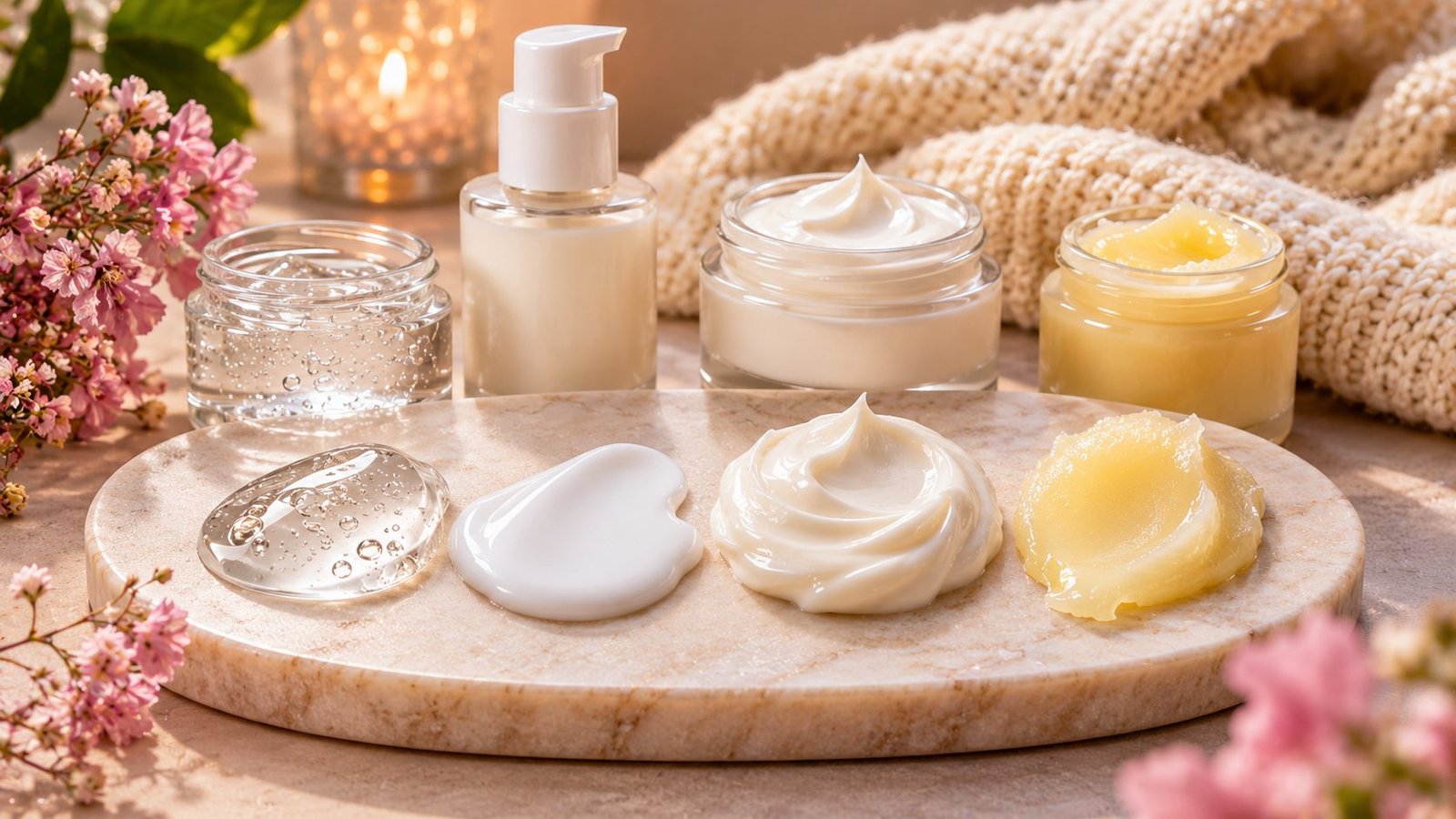
You don’t need to memorize a long list. These are a few familiar names you may spot on labels:
- Glycerin and hyaluronic acid: Help attract and hold water near the skin’s surface.
- Ceramides: Lipids that help support the skin’s protective barrier.
- Dimethicone: Helps smooth the skin and reduce moisture loss.
- Petrolatum: Useful for protecting very dry lips and certain dry patches.
A good moisturizer can combine several of these. The whole formula and how your skin tolerates it matter more than one trendy ingredient. DermNet explains how moisturizers work if you’d like to learn more.
8 Winter Skincare Mistakes to Avoid
A few everyday habits can make dry skin feel worse:
- Washing with very hot water. Lukewarm water is kinder to dry skin.
- Scrubbing away flakes. Harsh scrubs can make irritation worse.
- Cleansing too often. More face wash isn’t always the answer to oiliness.
- Skipping moisturizer because you’re oily. A lightweight one can still be useful.
- Forgetting sunscreen. Cold or cloudy weather doesn’t remove UV exposure.
- Trying lots of strong actives together. Keep things simple when your skin is irritated.
- Assuming every DIY ingredient is gentle. Lemon juice and rough scrubs can sting.
- Ignoring painful or persistent symptoms. Not every rash is just winter dryness.

A Little Extra Care for Lips, Hands and Heels
Keep a lip balm or plain petroleum jelly handy for dry lips. Reapply hand cream after washing, especially if you’re washing dishes or cleaning frequently. For rough heels and elbows, try a thicker body cream after bathing.
Shorter, lukewarm showers help too. And if a lip balm burns or stings, that isn’t a sign it’s working—try something gentler.
What About Homemade Face Masks?
It’s fine to enjoy an occasional self-care ritual, but a DIY mask won’t replace a good moisturizer. If your skin is already red, cracked, stinging or irritated, give homemade mixtures a miss.
We have separate guides to coffee face masks and besan face packs if you’re curious. Treat them as optional beauty ideas, not treatments for irritated skin, and avoid abrasive or acidic ingredients on sensitive or broken areas.
Your 7-Day Winter Skincare Check-In
Do these basics every day—not just on one particular day:
- Morning: Rinse or cleanse gently as needed, moisturize, and use appropriate daytime sun protection.
- Night: Remove makeup and sunscreen gently, cleanse as needed, and moisturize.
Then take one small note each day:
- Day 1: Does your cleanser leave your face tight?
- Day 2: Does your moisturizer feel comfortable by lunchtime?
- Day 3: Are your cheeks or lips getting extra dry?
- Day 4: Are you remembering daytime sun protection?
- Day 5: Is any product causing stinging or redness?
- Day 6: Do your hands or heels need more care?
- Day 7: What’s working—and what still needs attention?
This is a simple check-in, not a promise that skin will recover in seven days.
When Should You See a Dermatologist?
If dryness comes with painful cracks, bleeding, oozing, severe itching, worsening redness or a rash that won’t settle, get medical advice. Eczema, contact dermatitis and other skin conditions may need more than a moisturizer. Seek urgent care for breathing trouble or a severe sudden reaction.
Quick FAQs
Can oily skin get dry in winter?
Yes. You can have an oily forehead and still feel dry or tight elsewhere. Try gentler cleansing and a light moisturizer that suits you.
Is a face oil enough instead of moisturizer?
Not necessarily. A moisturizer often combines ingredients that hydrate and help reduce water loss. Face oil can be an extra step if you like it, but it isn’t a must-have.
Do I need to stop retinol in winter?
Not always. If an over-the-counter product irritates your skin, avoid layering more strong products and seek advice if needed. Ask your clinician before changing a prescribed treatment.
How often should I moisturize in winter?
After washing is a good starting point. Reapply when your skin feels dry, using a texture that suits you.
Should I use sunscreen even on cloudy winter days?
Yes, protect exposed skin during daytime outdoor activities. Use broad-spectrum, water-resistant SPF 30+ and follow the label for reapplication.
The Takeaway
Winter skincare doesn’t need to be complicated. Cleanse gently, moisturize where you need it, and keep up your daytime sun protection. If something feels too drying, change one step instead of buying five new products.
And if you’re deciding between a gel, lotion and cream, our moisturizer vs lotion comparison can help you choose.
Sources and further reading
- American Academy of Dermatology — Tips for relieving dry skin
- American Academy of Dermatology — Picking a moisturizer
- American Academy of Dermatology — Sun protection in cold weather
- DermNet — Emollients and moisturisers
This article shares general skincare information, not personal medical advice. See a qualified clinician for persistent or severe skin problems.


Comments